

Selected from nine applicants, the Universidad San Sebastián academic and Centro Ciencia & Vida researcher was recognized for her career in research on the neurobiology of aging, developed entirely in Chile.
Selected from among nine applicants, the principal investigator at Centro Ciencia & Vida and professor at Universidad San Sebastián was honored for her career in research on the neurobiology of aging, developed entirely in Chile.
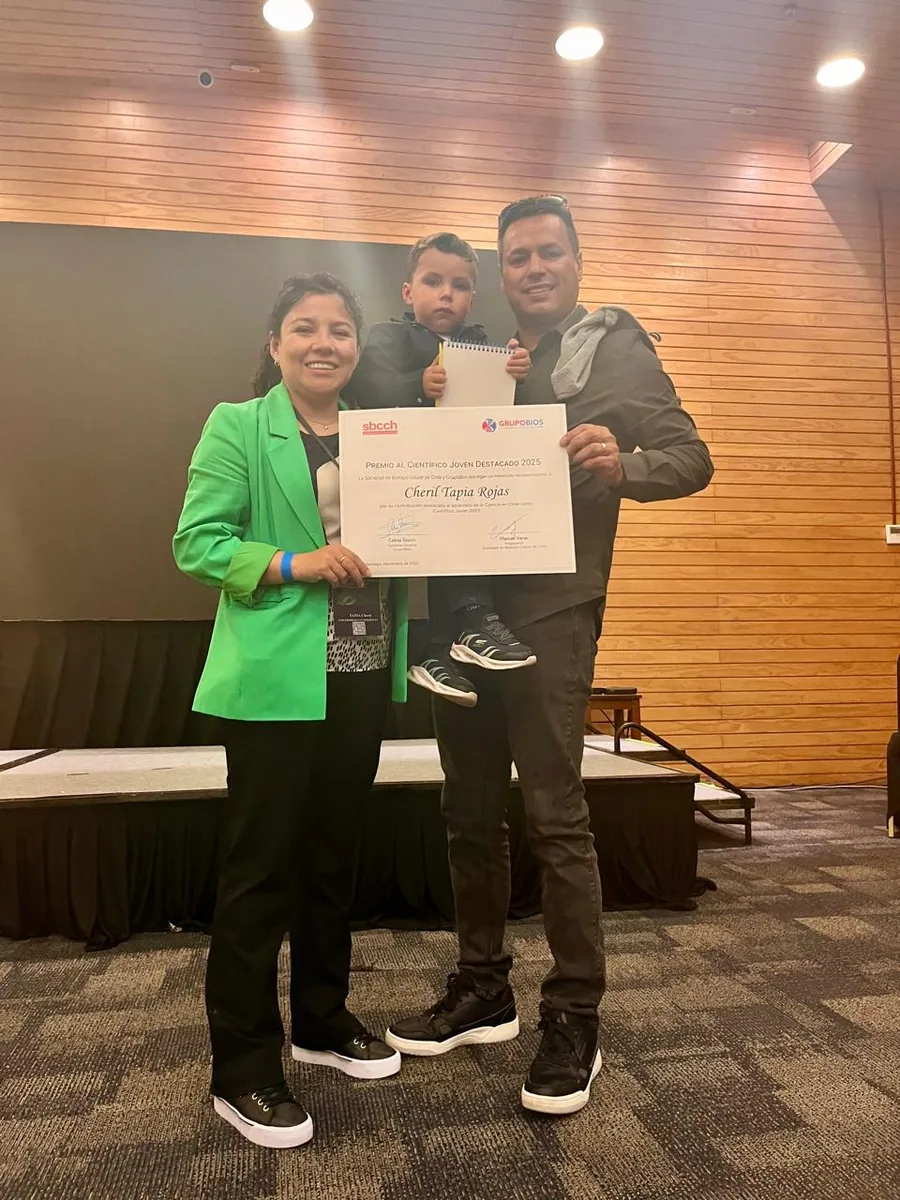
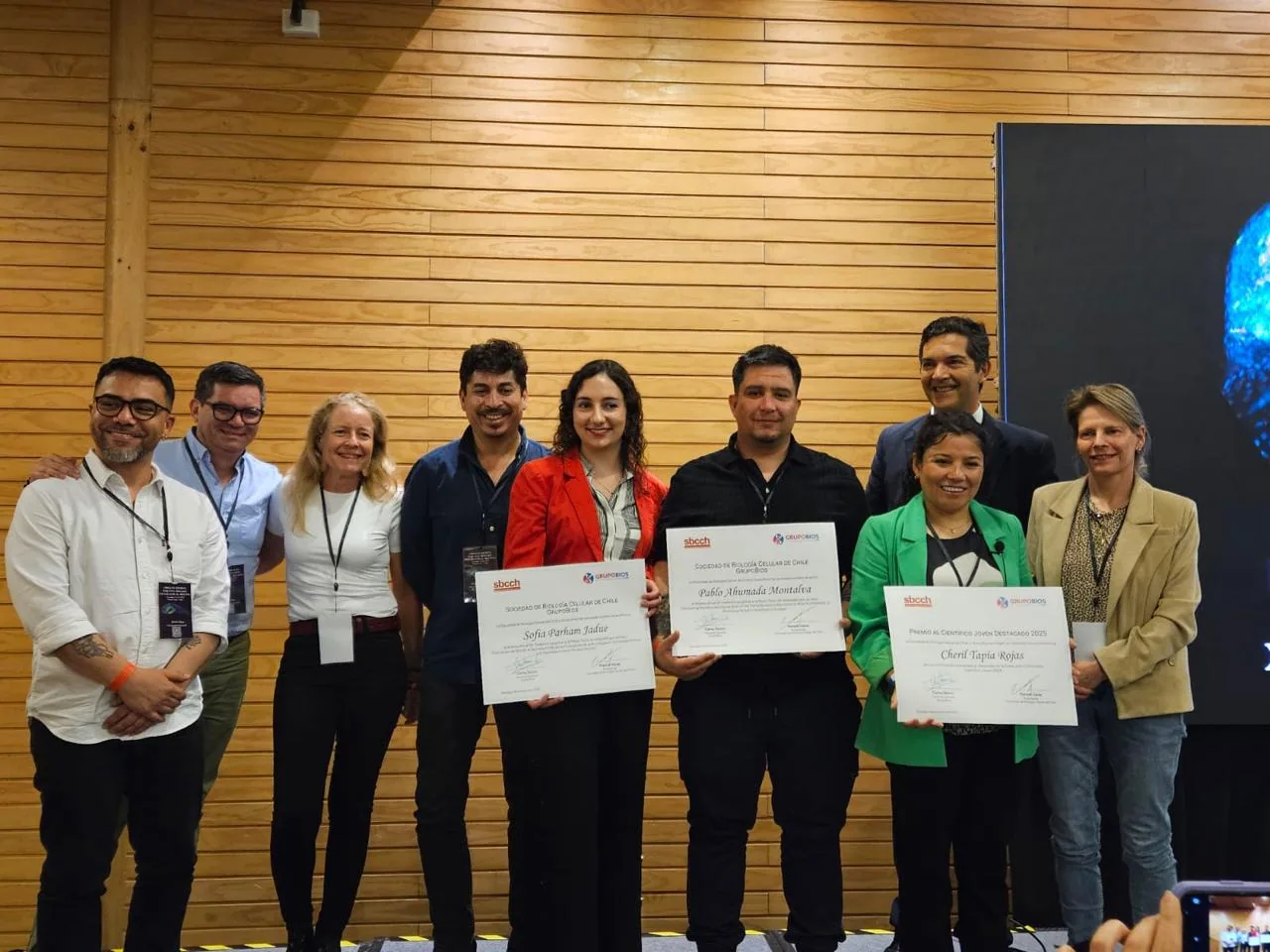
Dr. Cheril Tapia, a principal investigator at Centro Ciencia & Vida and professor at Universidad San Sebastián, received the 2025 Outstanding Young Scientist award, granted by the Chilean Society for Cell Biology (SBCCh) in conjunction with the company GrupoBios. The distinction recognizes researchers under 40 who have developed their line of work primarily in Chile, considering both their scientific productivity and the training of human capital, the awarding of competitive projects, and teaching.
For Dr. Tapia, the award has a special meaning because it summarizes a journey that has taken place entirely in Chile, from her Biochemistry studies in Valparaíso to her current work at USS and Centro Ciencia & Vida. “It is an important award for me because my entire career has been in Chile, including my postdoctoral fellowship and the awarding of my first projects. It makes this award very significant for me and my laboratory. We are all very happy that the work performed is being recognized,” noted the researcher, highlighting that this achievement is the result of the joint work of her entire laboratory team, founded eight years ago.
Neurobiology of aging
From the Laboratory of Neurobiology of Aging, Dr. Tapia investigates how the aging process affects the brain at the cellular and molecular levels. In particular, her team focuses on the function of mitochondria in hippocampal neurons (a region critical for memory) and how their deterioration with age may contribute to cognitive decline.
These studies seek to understand why synaptic connections become more vulnerable in old age, for example, in the face of the accumulation of harmful proteins, and to explore possible strategies to mitigate that damage. This line of research is directly linked to neurodegenerative diseases such as Alzheimer's, which are increasingly frequent in societies with an aging population.
The recognition will be presented at the SBCCh Annual Congress, which will be held in Puerto Varas between November 24 and 28. At that event, Dr. Tapia will also offer a talk in which she will present her scientific career and the main advances of her work in the neurobiology of aging.