top of page


One of the areas of the brain most affected by aging is the hippocampus, a crucial structure in learning and memory processes. My laboratory studies the changes that hippocampal mitochondria undergo in aging, specifically those found in synapses, which correspond to areas of neuronal communication.
Synaptic mitochondria are more vulnerable to damage than non-synaptic mitochondria. We are investigating structural and functional differences in synaptic mitochondria that explain this vulnerability and their contribution to age-related memory loss, with particular emphasis on the mitochondrial protease Lonp1. We also study factors that promote mitochondrial dysfunction, including the accumulation of phosphorylated tau (Ser396-Ser404: PHF-1) in mitochondria, a microtubule-associated protein that, upon phosphorylation, loses its function.
Another aspect that we explore is the possible anti-aging effect of molecules that improve mitochondrial function. We use in vitro and in vivo models, including primary mouse hippocampal neuron cultures, organotypic cultures, the (Senescence Accelerated Mouse-Prone 8), normally aged mouse C57BL6.
Lab Members
Research Associates
Claudia Jara Orellana, PhD
PhD Students
Daniela Cortés Díaz
Juan Francisco Roa (Co-supervisor)
Latest Publications
Neural Regen Res
June 19, 2025
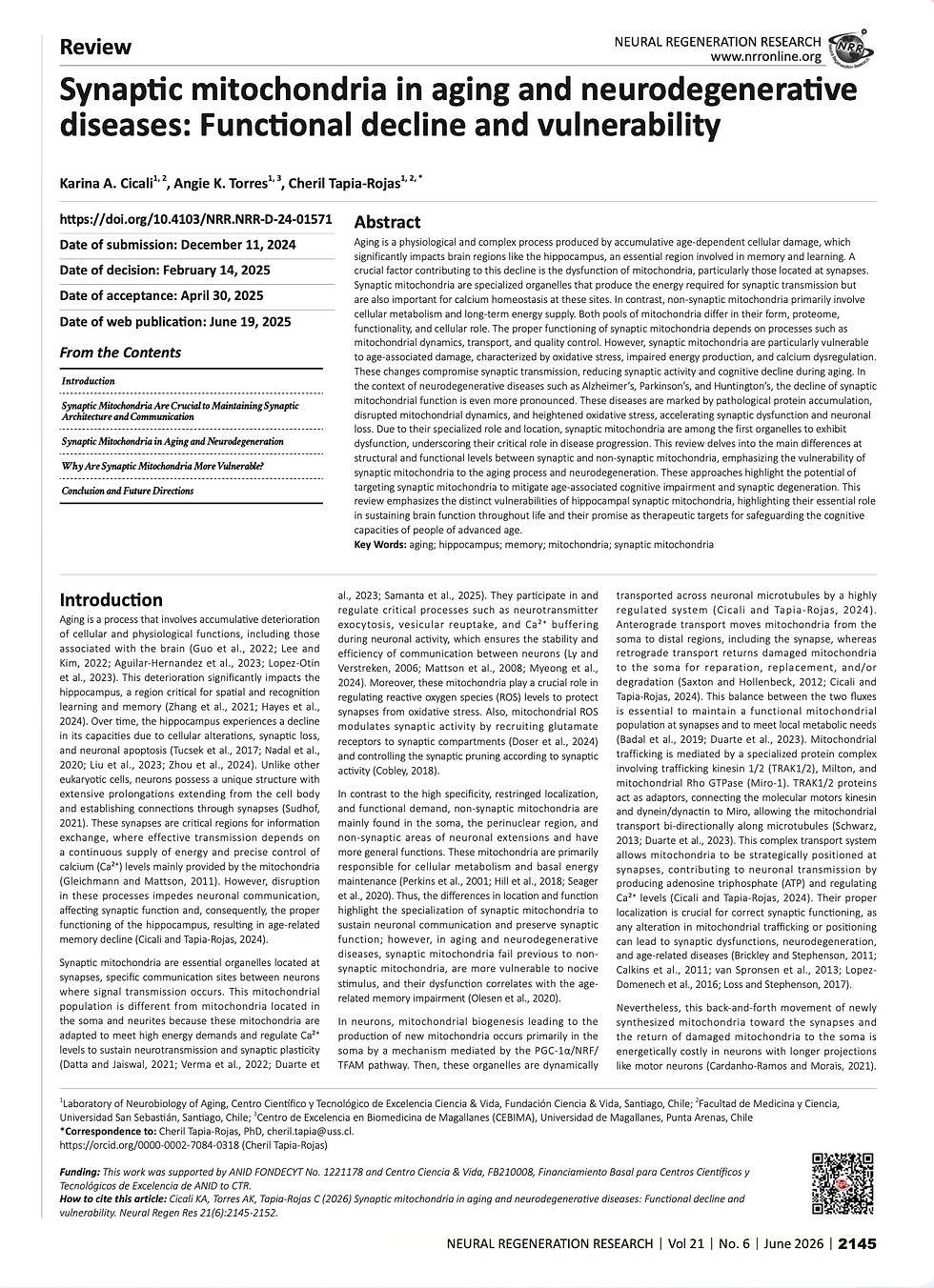
Synaptic mitochondria in aging and neurodegenerative diseases: unraveling their functional decline and vulnerability
%201_50_32%E2%80%AFp_m_.png)
LIFE SCIENCES
February 19, 2025
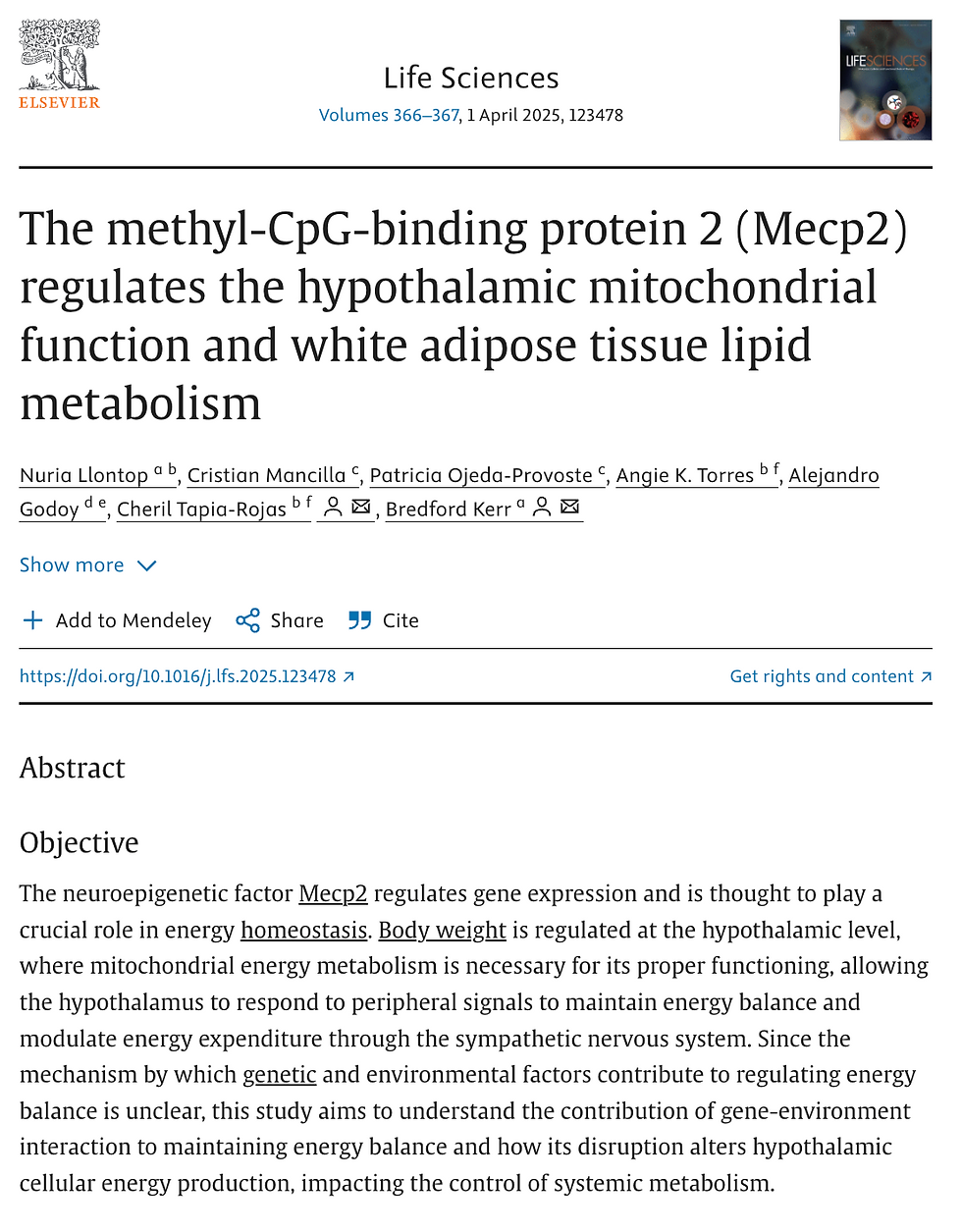
The methyl-CpG-binding protein 2 (Mecp2) regulates the hypothalamic mitochondrial function and white adipose tissue lipid metabolism
%2011_42_27%E2%80%AFa_m_.png)
NEUROTOXICITY RESEARCH
January 8, 2025
Curcumin Improves Hippocampal Cell Bioenergetics, Redox and Inflammatory Markers, and Synaptic Proteins, Regulating Mitochondrial Calcium Homeostasis
%202_13_11%E2%80%AFp_m_.png)
Latest Publications
bottom of page