top of page


Biology of Neurodegeneration Lab

Lab Director
Soledad Matus
Biology of Neurodegeneration Lab

Life unfolds in a constantly changing environment, and the ability to adapt is essential for cellular and organismal survival. This adaptive capacity not only maintains homeostasis but also underlies complex functions such as learning, movement, and tissue repair. At the cellular level, adaptation relies on mechanisms that sense stress and reorganize proteostasis.
Our research focuses on the integrated stress response (ISR), a conserved signaling pathway that enables cells to dynamically adjust protein synthesis in response to diverse stressors. Through translational control, ISR activation promotes adaptation, cellular recovery, and resilience.
We investigate how this pathway and its upstream sensors shape adaptive responses in the nervous system. Our findings indicate that the adaptive capacity of the ISR pathway is essential for maintaining the physiological function of neurons and other cells of the nervous system.
From synaptic plasticity to motor function, metabolism, and neuronal regeneration, we aim to understand how ISR-driven adaptation determines cellular outcomes across health, aging, and neurodegeneration, and whether these adaptive mechanisms can be harnessed to build resilience in brain disorders and aging, where adaptive responses are compromised.
Lab Members
Postdoctoral Fellow
Nicolás Martínez Alarcón
PhD Students
Marcela Escandón Bernal
Juan Francisco Roa-Petit
Latest Publications
PLOS One |
PLOS One |
July 15, 2025
Peripheral administration of blood from tau transgenic animals exacerbates brain tau-associated pathology
%2012_43_04%E2%80%AFp_m_.png)
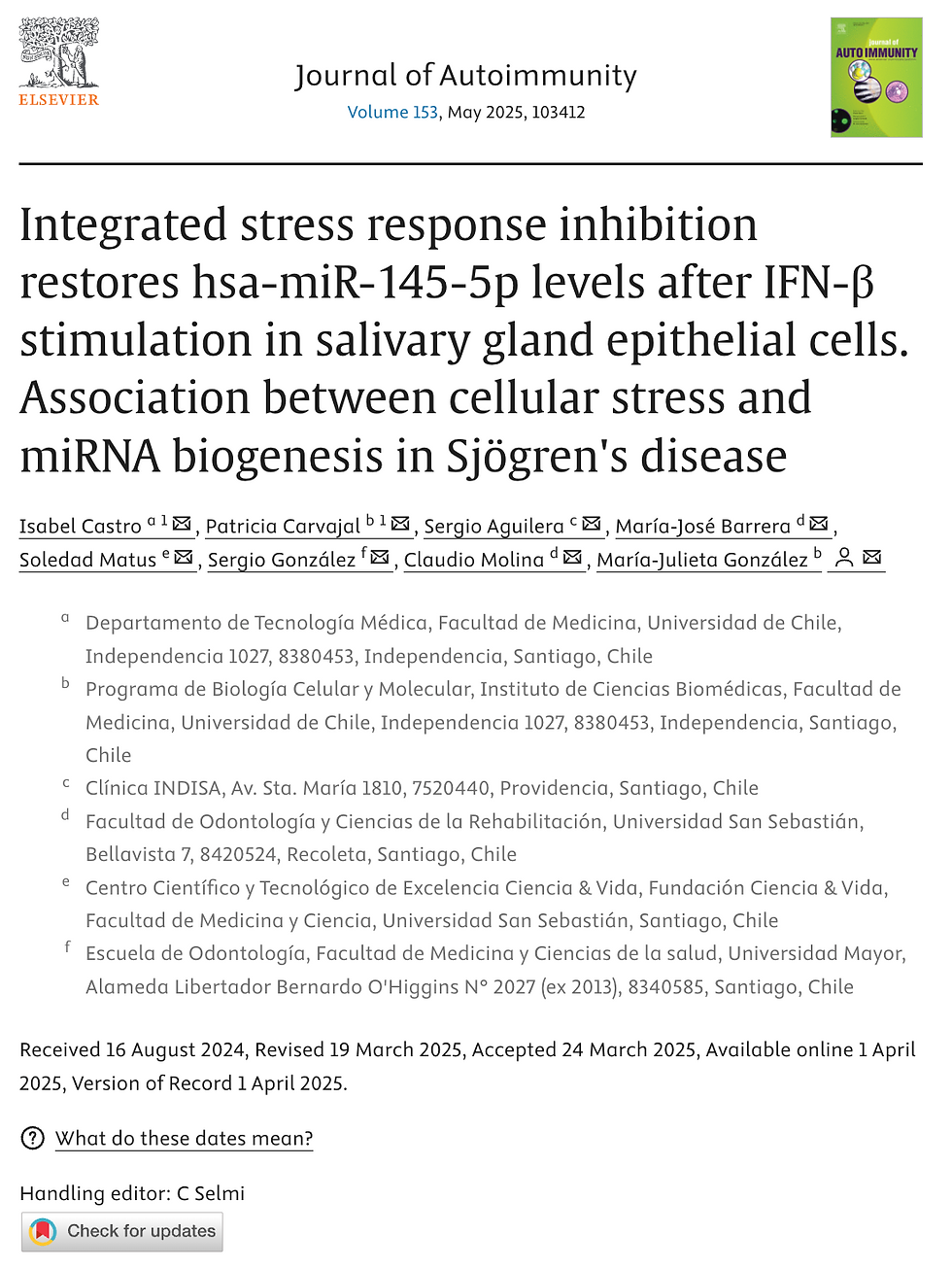
JOURNAL OF AUTOIMMUNITY
JOURNAL OF AUTOIMMUNITY
March 24, 2025
Integrated stress response inhibition restores hsa-miR-145-5p levels after IFN-β stimulation in salivary gland epithelial cells. Association between cellular stress and miRNA biogenesis in Sjo<spacing diaeresis>gren's disease
%201_00_36%E2%80%AFp_m_.png)
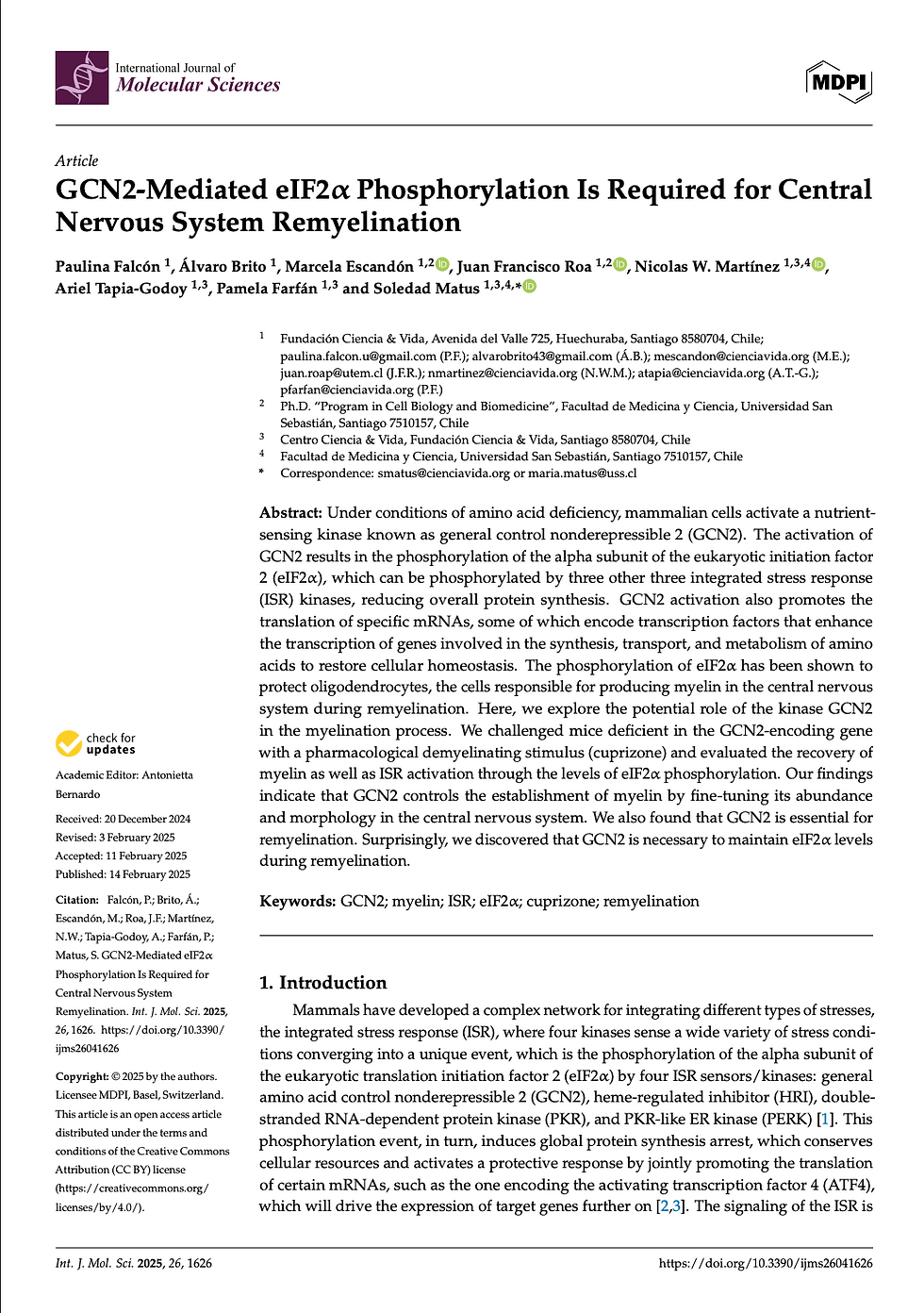
INTERNATIONAL JOURNAL OF MOLECULAR SCIENCES
INTERNATIONAL JOURNAL OF MOLECULAR SCIENCES
February 14, 2025
GCN2-Mediated eIF2α Phosphorylation Is Required for Central Nervous System Remyelination
%2012_40_58%E2%80%AFp_m_.png)
Latest Publications
bottom of page