
Emerging from the Centro Basal Ciencia & Vida, the Fundación Ciencia & Vida, and the Universidad San Sebastián, the spin-off Immuno Connect is advancing two complementary solutions against an incurable disease.
The test consists of a low-cost, minimally invasive blood test using the ELISA technique, while the treatment aims to halt the inflammatory cycle before the onset of the first symptoms.
The project, led by Dr. Rodrigo Pacheco, began with funding from the Michael J. Fox Foundation and plans to complete clinical validation with local patients, which could represent a milestone for biotechnology and aging science in Chile.
The Chilean biotechnology company Immuno Connect is advancing the development of an early diagnostic test and an experimental immunotherapy for Parkinson's disease. Both solutions—created after seven years of research at the neuroimmunology laboratory of the Centro Basal Ciencia & Vida, the Fundación Ciencia & Vida, and the Universidad San Sebastián (FCV-USS)—are preparing to move into clinical validation phases in patients.
The technology transfer roadmap involves starting with the validation of the early diagnostic test, a tool that seeks to change the current screening paradigm, as Parkinson's is currently often detected in advanced stages through expensive and invasive exams. "A PET scan costs around one and a half million pesos in a clinic and is almost impossible to perform in the public system. In contrast, this new test would allow for rapid, cheaper, and more accessible confirmation with a simple blood sample. Therefore, we will initially focus our efforts on the validation of this diagnostic test," stated Dr. Rodrigo Pacheco, founder of the spin-off and director of the laboratory where both solutions were designed.
Early detection of Parkinson's can change the course of the disease. Although no curative therapy yet exists, an early diagnosis opens the door to a comprehensive approach including neurological follow-up, rehabilitation, and community programs within the primary health network. This support improves patients' quality of life, delays dependency, and optimizes healthcare system resources. The benefits of having an early diagnostic tool are reflected in four dimensions: diagnostic confirmation, reduction of uncertainty, boosting research with early-stage patients, and implementation of early self-care programs.
From the preclinical phase to transfer
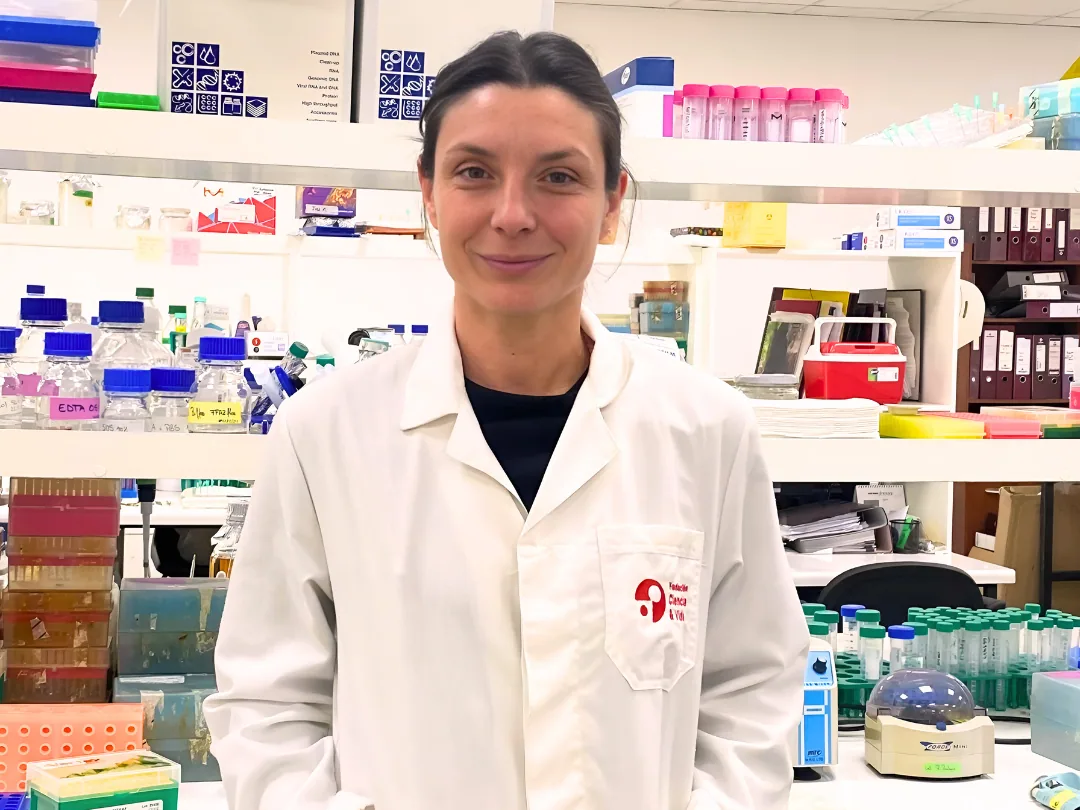
Within the team driving Immuno Connect, a group of researchers led by scientist Valentina Ugalde has played a decisive role in the development of the diagnostic test and the consolidation of the project as a scientific spin-off. Ugalde, a biochemist and researcher at the Neuroimmunology laboratory of the Centro Ciencia & Vida, embodies a new generation of women leading biotechnological innovation with a focus on public health and technology transfer.
"With Immuno Connect, we seek to make the leap from the preclinical stage to clinical development. This diagnosis represents not only a scientific advance but also a new way of doing science, with diverse and complementary teams," she explains.
The NitraSyn Test, designed from a highly specific monoclonal antibody against the α-synuclein protein, uses the ELISA technique, recognized for its low cost and easy standardization, facilitating its use in conventional clinical laboratories, even in resource-limited settings. Its advantages include precision, accessibility, and the ability to detect the disease in pre-motor phases, before classic symptoms appear.
"The idea is to offer an early diagnosis before patients experience tremors or stiffness, when it is still possible to intervene and slow the process. Currently, there is nothing targeting that particular niche," notes the researcher, who emphasized that the antibody has both diagnostic and therapeutic potential: "Our technology is based on a unique antibody that could be adapted to other neurodegenerative diseases. If it works for Parkinson's, the impact could extend to thousands of people in the future."
In addition to its value as a diagnostic test, the tool acts as a bridge to innovative therapies. In particular, it allows for the identification of patients eligible for the experimental CAR-PARK immunotherapy, also developed by Immuno Connect. Thus, diagnosis ceases to be an end in itself and becomes the key to accessing cutting-edge personalized treatments.
Studies conducted by the team led by Dr. Pacheco have received national and international funding and have been recognized by various scientific journals. Among their most significant findings is that the origin of this disease (which currently affects around 10 million people worldwide) could lie in the gut before spreading to the brain.
Voluntary licenses and 25 million cases
Parkinson's disease is one of the most common neurodegenerative disorders in the world, characterized biologically by the progressive loss of dopaminergic neurons. The World Health Organization (WHO) projects that by 2050, 25.2 million cases will be recorded globally, doubling the current incidence rate. In Chile, its prevalence is 160.7 cases per 100,000 inhabitants, with nearly 4,500 annual diagnoses and 30,000 people currently living with this condition.
Dr. Alvaro Martínez, current Director of Intellectual Property and Technology Transfer at the Centro Ciencia & Vida (FCV-USS), explained that the project plans to incorporate the voluntary or socially responsible licensing model, allowing the technology to be used by low-income countries beyond the traditional pharmaceutical market. This represents a pioneering approach in Chile by integrating equity and access criteria into biomedical technology transfer.
"In order to enhance and democratize access to this technology, as well as strengthen its international projection and social impact, for the first time we have promoted a technological and commercial transfer strategy through the design and implementation of a voluntary and socially responsible licensing strategy, to facilitate equitable access for low-income countries whose public health programs require it. This represents a historic milestone in the use of such instruments in Chile."
Constanza Sigala, Business Director of the Centro Ciencia & Vida, emphasized that the disorder currently has only palliative options that act when the disease is already advanced. "This test would be simple, accessible, and fast. It would allow confirmation of whether a patient actually has Parkinson's, without relying solely on the clinical examination performed by the doctor. It would be a way to democratize diagnosis and provide certainty, as many patients receive medication based only on clinical suspicion without absolute confirmation."
The entity created by National Science Prize winner Dr. Pablo Valenzuela (who is part of the board of the new spin-off) along with doctors Bernardita Méndez and Mario Rosemblatt, will play a key role in the project's future, primarily supporting intellectual property protection and business models for both products. Among its next steps, the team led by neuroimmunologist Rodrigo Pacheco is moving forward with an agreement with Chilean patient groups to conduct the clinical study of the diagnostic test.
Sigala explained that the characteristics of the confirmation method also offer hope for better results compared to experiences in recent years. "Many clinical trials to treat Parkinson's have failed because the participating patients already have the disease in a too advanced stage. If we could diagnose in the initial stages, it would be possible to include people in early phases and more accurately evaluate the efficacy of medications. This way, we would know if therapies fail because of the drug itself or because the patient was already too far along in the disease."
Effectiveness in preclinical models
To date, the findings obtained at the Centro Ciencia & Vida have demonstrated effectiveness in preclinical models, which precisely motivated the formation of this biotechnology company to manage funding, protect intellectual property, and form strategic alliances with specialized centers. "We begin this stage with enthusiasm because something that started as a basic study can become a tangible product and a real benefit for society," said Dr. Pacheco.
The specialist emphasizes that the transition from a basic scientific stage to preclinical validations, prior to a potential market arrival, represents a milestone for aging science in Chile and the local biotechnology ecosystem. "Parkinson's is a disease that is generally diagnosed when approximately 70% of dopaminergic neurons have died. At that point, there is little you can do. Our idea is to intervene before it is irreversible, provide access to an early diagnosis, and open the door to more effective therapies."
In recent years, the team of scientists observed the efficacy of their experimental therapy, which subsequently opened the opportunity to adapt this knowledge to the design of an associated diagnostic method. The key to the development lies in the appearance of the pathogenic protein in the gut, the induction of the immune response, and its spread to the brain—a dynamic initially evaluated in aggressive preclinical models and then in contexts closer to humans, where the disease appears spontaneously with aging.
According to Dr. Pacheco, the studies contributed to characterizing the effects based on dose and administration frequency, in addition to confirming that the therapy is safe and produces no significant side effects. During that process, a parallel discovery was made: the antibody used to halt the inflammatory cycle demonstrated diagnostic potential in early stages, that is, before motor symptoms were triggered.
"This antibody can differentiate between the sera of patients and healthy individuals, also correlating with the degree of disease progression. We found it had diagnostic potential because it was able to detect the pathogenic protein in pre-symptomatic stages in preclinical models. This opened the possibility for us to develop a low-cost, accessible, and reproducible diagnostic kit," the researcher concluded.
By: Luis Francisco Sandoval. Agencia Sandoval & Meirovich Comunicaciones.