
Dr. Tapia’s research focuses on understanding how aging affects, at the cellular and molecular levels, the mechanisms that sustain memory. Her team studies the role of mitochondria in hippocampal neurons and why synapses become more vulnerable with age.
Dr. Tapia's research focuses on understanding how aging affects, at the cellular and molecular level, the mechanisms that sustain memory. Her team studies the role of mitochondria in hippocampal neurons and the reasons why synapses become more vulnerable with age.
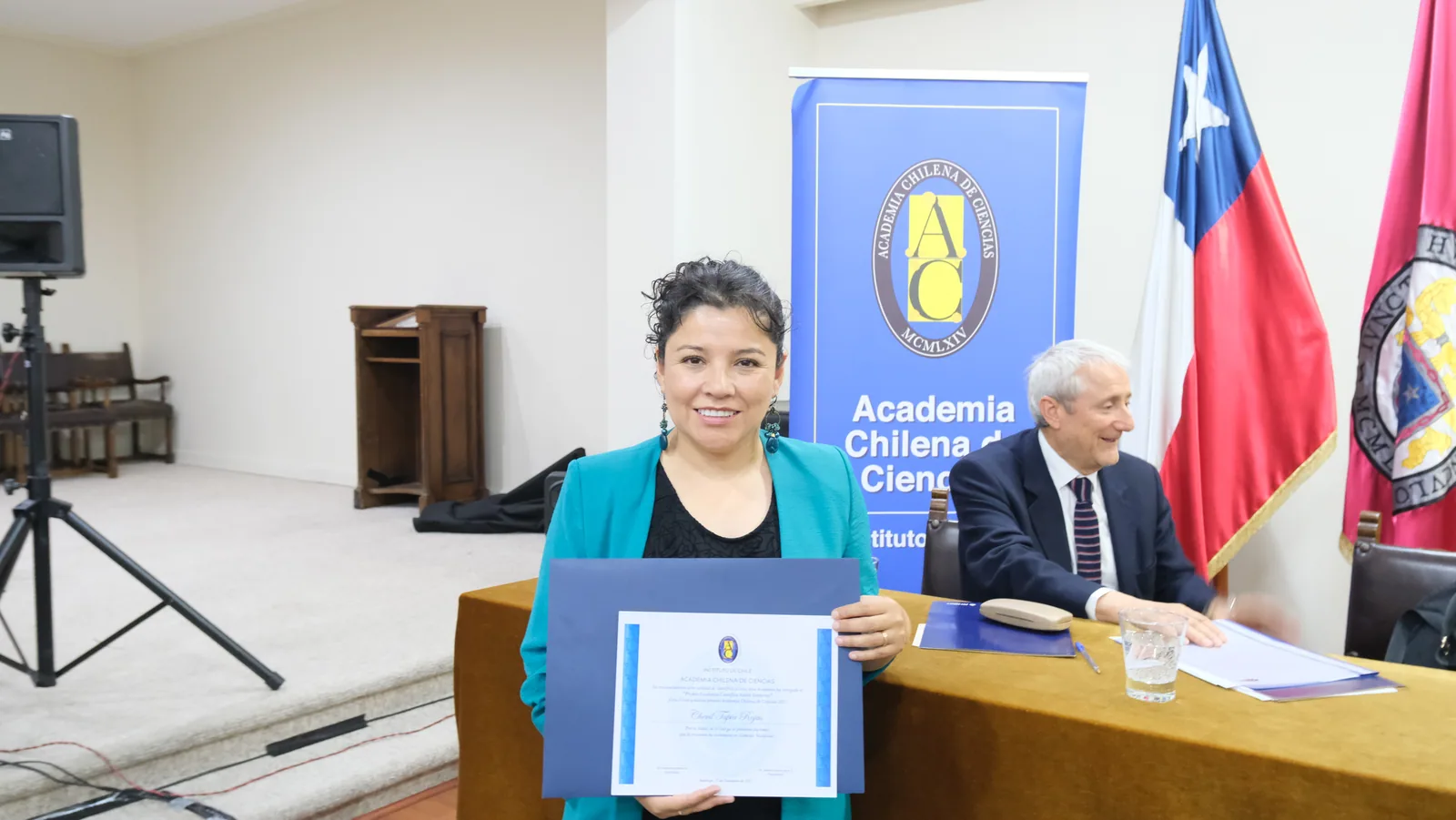
Dr. Cheril Tapia Rojas, an academic at the School of Biochemistry of the Faculty of Science at the Universidad San Sebastián and principal investigator at the Centro Basal Ciencia & Vida, received the Scientific Excellence Award granted annually by the Chilean Academy of Sciences, named in honor of Adelina Gutiérrez, the first woman to earn a doctorate in Astrophysics in Chile and a pioneer in academia. This recognition highlights the trajectory of young researchers (under 40 years old) who have made significant contributions to the natural and exact sciences. In the case of Dr. Tapia, the distinction is linked to her research on brain aging, work focused on how the mechanisms that sustain memory deteriorate with age.
A biochemist from the Pontificia Universidad Católica de Valparaíso and a Doctor in Biological Sciences from the Pontificia Universidad Católica de Chile, Cheril Tapia also directs the Neurobiology of Aging laboratory at the Centro Ciencia & Vida (FCV - USS). She has developed her entire scientific career in Chile, establishing her laboratory early on and leading research projects, in addition to dedicating herself to training new researchers and teaching.
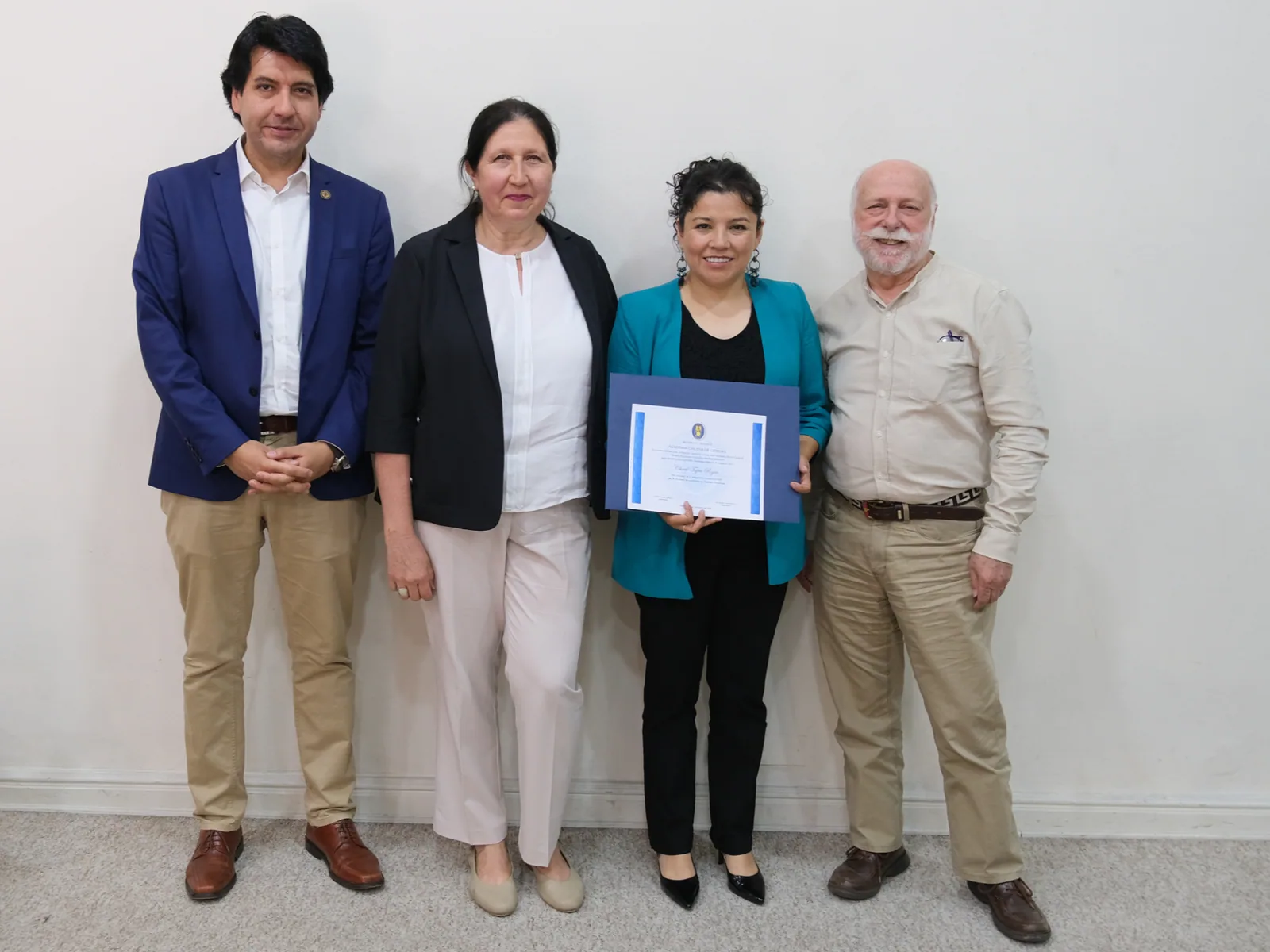
The Adelina Gutiérrez award joins another achievement obtained by the researcher a few weeks ago: the “Outstanding Young Scientist 2025” Award, granted by the Chilean Society of Cell Biology together with the company GrupoBios, for her trajectory and training work.
“Receiving, at 39 years old, the recognition from the Society of Cell Biology and now from the Chilean Academy of Sciences, both intended to highlight young scientific trajectories, has a deeply special meaning for me. I interpret it as a sign of confidence not only in the path traveled but also in the potential of a trajectory still in consolidation. I also feel it as a recognition of perseverance, the ability to grow in demanding contexts, and, at many moments, the decision to move forward even when the paths were not obvious or easy,” comments Dr. Tapia. She adds that this achievement supports years of sustained work “from early stages of training to the development of an independent scientific career,” valuing the collective effort of mentors, colleagues, and students who have accompanied her path.
Research on brain aging and memory
From the Neurobiology of Aging Laboratory that she directs, Dr. Tapia investigates how the aging process affects the brain at the cellular and molecular level. In particular, her team focuses on the role of mitochondria in hippocampal neurons (a region critical for memory) and how their deterioration with age can contribute to cognitive decline. Her studies seek to understand why synaptic connections become more vulnerable in old age—for example, in the face of the accumulation of certain harmful proteins—and explore strategies to mitigate that damage, a line of research directly related to neurodegenerative diseases such as Alzheimer's.
“Memory is not lost in an abstract or inevitable way, but depends on the energy and structural health of neurons. In particular, mitochondria, often known only as ‘the cell's batteries,’ are key players that define how the brain ages. In our research, we show that when mitochondria fail to maintain their internal quality, especially in synapses, neuronal communication is compromised, and with it, memory.”
Understanding these processes—she emphasizes—allows us to conceive brain aging not as an inevitable destiny, but as a biological phenomenon with windows for intervention, opening the possibility of designing early and precise strategies to promote healthy cognitive aging focused on preserving the function of synaptic mitochondria.
Commitment and future projection
“More than a point of arrival, these recognitions represent an impulse to continue advancing and to pave the way for those who are now beginning their own journey in science,” highlights Dr. Tapia, underlining her commitment to continue contributing from academia to the scientific development of Chile.
Among her next challenges is to deepen the translational aspect of her findings: advancing from the basic understanding of mechanisms toward intervention strategies that allow, for example, determining when and how to act on mitochondrial function to have a real impact on the course of cognitive aging. Likewise, she seeks to investigate in greater detail the differences between sexes in brain aging, identify critical periods in the aging process, and explore possible neuroprotective therapies based on maintaining mitochondrial health in neurons.
She intends to continue training new generations of scientists with an integrative perspective, connecting fundamental biology, aging, and social challenges. In that framework, her work also seeks to consolidate a space for development where scientific questions are built with rigor, patience, and collective work. “This is just beginning!” concludes Dr. Tapia.