

A study published in Cell Reports Medicine adapted a technology developed to treat cancer for Parkinson's disease, which involves modifying the patient's defense cells in the laboratory to recognize a precise target.
A study published in Cell Reports Medicine adapted a technology developed to treat cancer for Parkinson's disease, which consists of modifying the patient's defense cells in the laboratory so that they recognize a precise target.
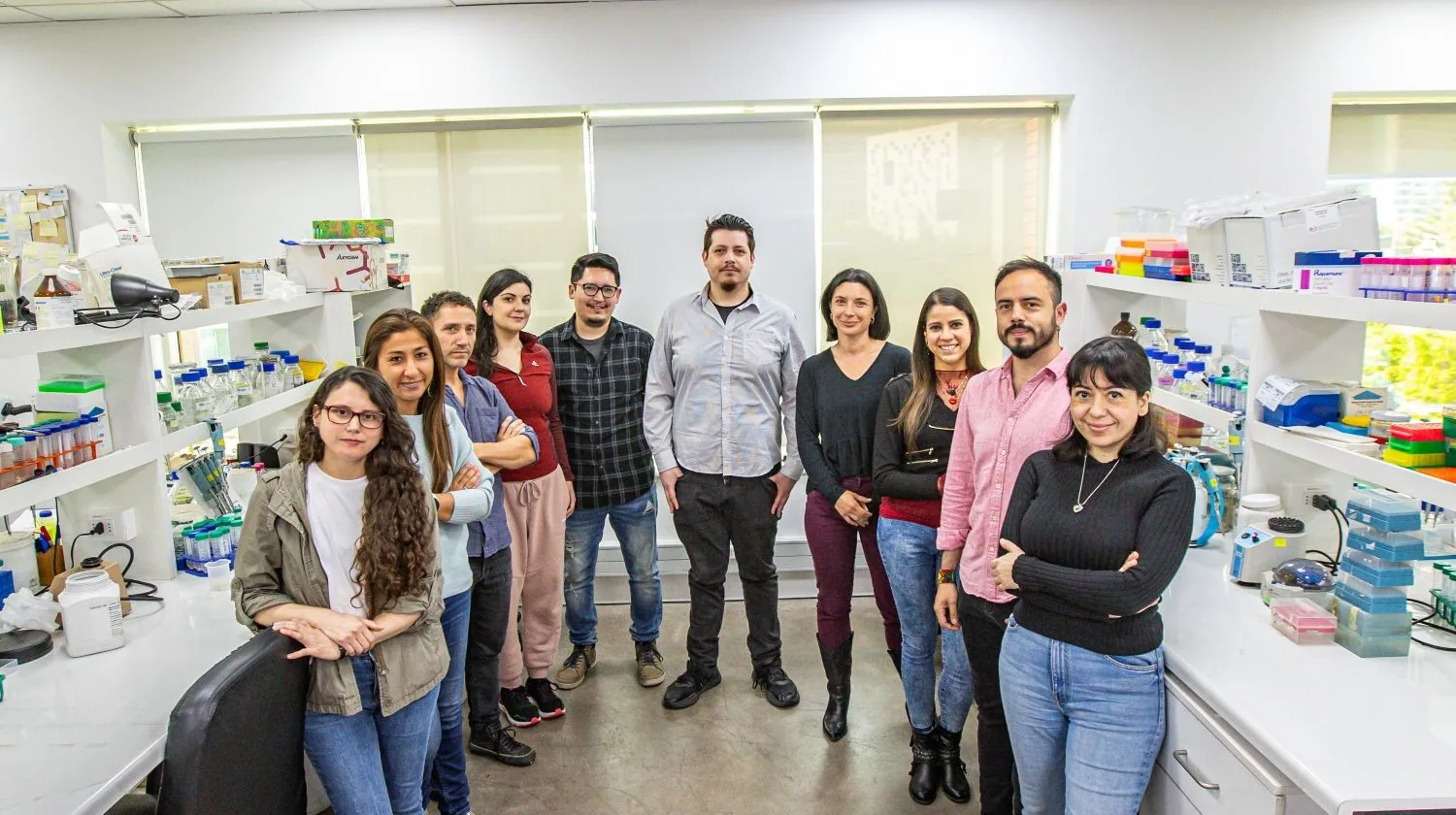
The work is led by Dr. Rodrigo Pacheco, academic at the Faculty of Medicine of the Universidad San Sebastián and principal investigator of the Centro Basal Ciencia & Vida. In two preclinical models of the disease, the treatment reduced brain inflammation, neuron loss, and motor impairment.
The immune system works with a basic criterion: distinguishing self from non-self. In Parkinson's disease, this criterion fails, and it is estimated that much of the damage suffered by patients stems from this confusion. A team led by researchers from USS and the Centro Basal Ciencia & Vida managed to halt this mistaken reaction in preclinical models, modifying defense cells to turn off the inflammation that damages neurons from early stages of the disease. The work was published in the journal Cell Reports Medicine .
It all starts with a protein called α-synuclein, a common component of healthy neurons. In the neurons of people with Parkinson's, this protein undergoes a chemical modification, called nitration, which changes its structure enough for the body to stop recognizing it as its own.
As a result, a defense reaction directed against the body's own tissue is triggered. T lymphocytes, the cells that direct the immune response, are activated against this altered version of α-synuclein, reach the brain, and awaken microglia, the cells responsible for monitoring brain tissue. The microglia then behave as if they were facing an infection and release substances that damage their surroundings.
The microglia's reaction begins to generate more altered α-synuclein, so this inflammation becomes chronic and kills neurons over time, especially those that produce dopamine, the molecule with which the brain commands movement. Each damaged neuron leaves behind more altered protein, which reactivates the lymphocytes, and the cycle begins anew.
Interrupting this cycle is the purpose of the work led by Dr. Rodrigo Pacheco, academic at the USS Faculty of Medicine and director of the Neuroimmunology Laboratory of the Centro Basal Ciencia & Vida . Researchers from the USS Faculties of Medicine and Sciences also participate, along with collaborators from University College London, the Universidad de Chile, and the Technical University of Denmark, among other institutions.
An inflammatory process like this could be combated with drugs that lower immune system activity, at the cost of leaving the body with fewer defenses against other threats. What the team sought was the opposite: a therapy capable of inhibiting the specific immune response against altered α-synuclein, without modifying the general immune response.
A technology borrowed from oncology
The tool comes from cancer treatment. In CAR-T therapies, lymphocytes (defense cells) are extracted from the patient's blood, and an artificial receptor is added in the laboratory—a custom-made antenna to recognize a precise tumor molecule. Once modified, these cells are returned to the same patient, turned into a weapon directed against that specific molecule, so that they attack the tumor but not healthy tissue.
In cancer, it has been known for decades that there is an underlying immunological problem, and that it can be treated by boosting the immune system. In Parkinson's, on the other hand, the study of the immune system is much younger, having started about 15 or 20 years ago. Therefore, proposing an immunotherapy, and especially a CAR-T therapy, is highly novel," explains Dr. Pacheco.
His team made two changes to this technology. The first has to do with what the antenna recognizes, which in the case of Parkinson's is not a tumor but altered α-synuclein. The second defines what the cell does when it finds what it is looking for. In cancer, CAR-T therapy destroys what it recognizes; conversely, in the case of Parkinson's, the goal is to inhibit the inflammatory reaction of the defenses against the altered synuclein. Therefore, the researchers added a gene (Foxp3) that transforms CAR-T cells into regulatory T lymphocytes, which are responsible for turning off immune responses. The antenna guides it to the altered protein where the disease is starting and, upon arrival, instead of attacking it, calms the inflammation around it, preventing the subsequent spread of the process.
To manufacture this antenna, an antibody capable of distinguishing the altered version from the healthy one was needed, since normal α-synuclein performs functions in neurons throughout the body, including those in the brain, skin, and gut, among others. The researchers immunized mice with a fragment of the altered protein and screened hundreds of antibodies produced by the animals, until they found one, named 1A11, which binds to the altered version and not the normal one. With this piece capable of recognizing the altered protein, the tip of the antenna for the Parkinson's CAR-T therapy was built.
Two testing scenarios
The reprogrammed cells were tested in two preclinical models of the disease. “When a therapy works in only one model, there is always a doubt as to whether the result depends on that particular model. That it also works in a second model suggests a more universal effectiveness, and that sheds light on the fact that it could be useful in humans,” points out Dr. Pacheco.
In the first, Parkinson's is induced with a modified virus that introduces the human α-synuclein gene into the brain structure containing the dopamine-producing neurons, which control voluntary movements. Mice without CAR-T therapy lost about 31% of those neurons, and those that were treated, around 18%. The decisive comparison came from a third group, which received the same regulatory cells, but with the antenna pointing to a molecule unrelated to Parkinson's. That group lost as many neurons as the untreated animals, so the effect does not come from the cells alone, but from the antenna that guides them.
The second model consists of mice that develop the disease spontaneously as they age. A single dose, administered before symptoms appeared, improved motor performance and reduced brain inflammation, and the motor benefit was still present twenty weeks after the injection. Repeating the administration increased the potency of the therapy and also decreased the deposits of altered protein in the brain and gut.
Text by María José Marconi J., Vice-Rectorate for Research and Doctoral Studies USS .