
The science outreach program celebrates a decade of bringing cutting-edge research conducted in Chile to mass audiences both within and outside the country.
The science outreach program celebrates a decade bringing cutting-edge research made in Chile to mass audiences inside and outside the country.
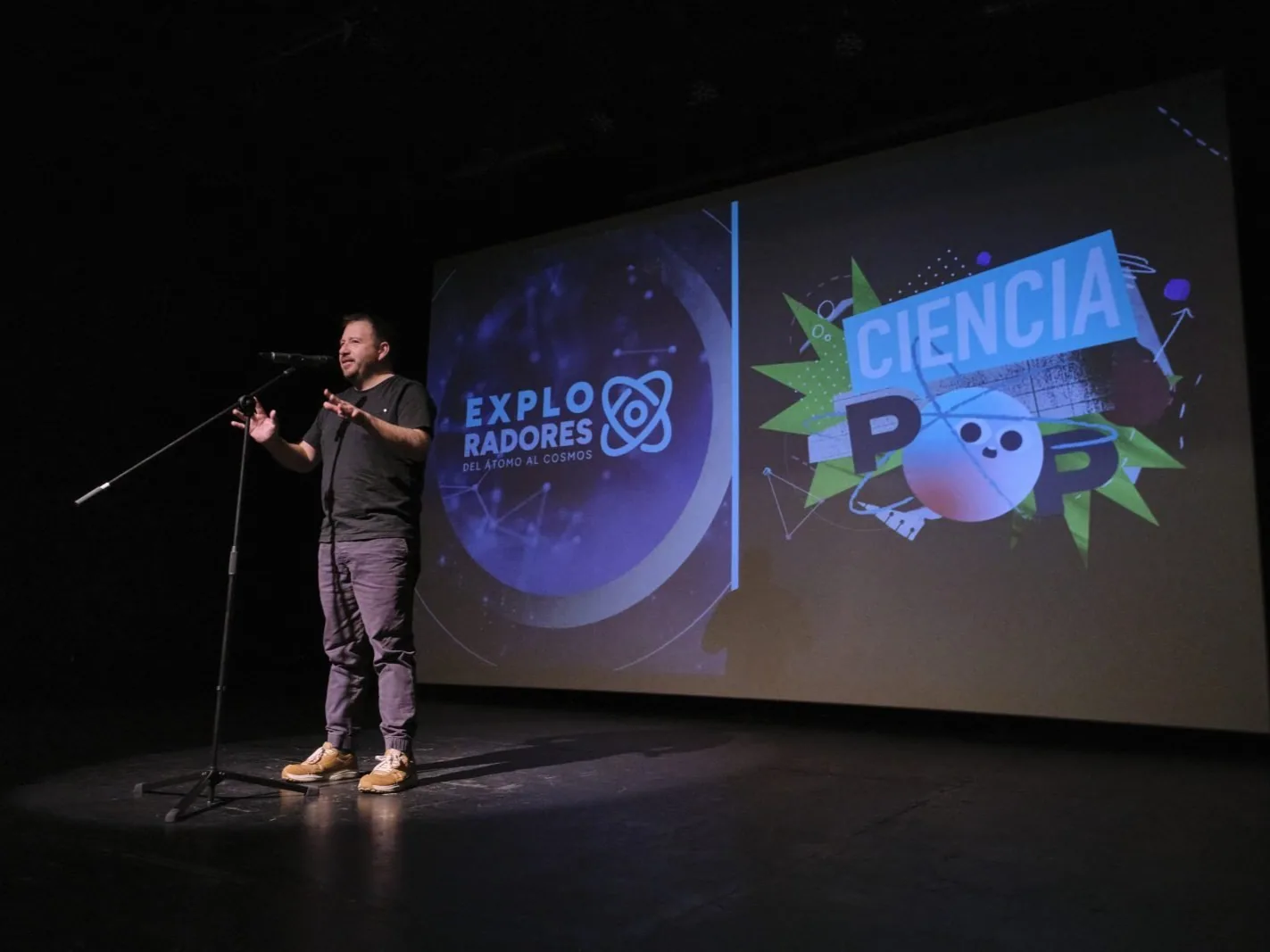
On Wednesday 6 de agosto, the new season of “Exploradores del átomo al cosmos” debuted, a 24 Horas de TVN program produced by Imago Producciones that since 2016 has consolidated itself as one of the most recognizable showcases of Chilean science on broadcast television and news signals. With its tenth cycle on air, the program reaches a milestone for outreach in Spanish: ten years and millions of viewers connected with frontier research conducted in universities, scientific centers, laboratories, and public and private consortia throughout Chile.
Since its inception, “Exploradores del átomo al cosmos” has pursued a clear objective: to bring national science of excellence closer to the general public through clear language, visual appeal, and rigorous editorial care. The proposal combines human stories—the curiosity of researchers, their doubts, findings, and persistence—with didactic explanations of complex concepts, supported by animations, archival material, field visits, and laboratory demonstrations. This mix has allowed the scientific conversation to expand beyond the academic community, sparking interest in children, youth, and adults, and building bridges with audiences abroad through the international signal of 24 Horas de TVN and its digital platforms.
A decade of science with a local accent and a global perspective
In its nine previous seasons, the program has traveled the country to show that Chilean research occurs both in large urban centers and in regions: in northern observatories and southern coastal laboratories, in basal centers, millennium institutes, regional universities, hospitals, national parks, and cutting-edge laboratories. This territorial diversity has been a hallmark of the program, as has its thematic breadth, which includes astronomy, biomedicine, biotechnology, data science, clean energy, marine sciences, paleontology, neuroscience, climate change, computational social sciences, and science education, among other scientific and investigative lines.
The tenth anniversary is an opportunity to highlight concrete impacts of science on daily life, such as vaccines, diagnostics, new materials, clean technologies, better risk management, traceability for the food industry, solutions for drought, biodiversity conservation, or artificial intelligence tools at the service of health and education. In this sense, each episode proposes verifiable answers to questions of high public interest: how is scientific evidence transformed into policies, products, or services? Who participates in these processes and what ethical and social challenges emerge?
What Season 10 proposes
Without losing its character, the new season reinforces a transversal approach in three dimensions:
Country challenges: research affecting strategic areas such as water security, energy transition, public and precision health, climate resilience, and knowledge-based productivity.
Interdisciplinarity and transfer: teams integrating basic and applied sciences, engineering, social sciences, and humanities, with international collaborations and links with the public and private sectors.
Talent and training: stories of young researchers, mentoring networks, and laboratories where new generations of scientists are trained.
As usual, each episode will rely on pedagogical resources, analogies, visualizations, and demonstrations to make the complex understandable without sacrificing precision. Editorial care and the contrasting of sources remain part of the creative process, in line with good practices in public communication of science.
In an information ecosystem marked by an overabundance of content, misinformation, and audience fragmentation, scientific outreach on television maintains a decisive advantage: it reaches diverse audiences, including those who do not actively seek scientific content in digital environments. At the same time, its presence on television is complemented by multiplatform formats, which amplifies reach and drives on-demand consumption of reports and interviews.
The program's contribution is expressed on several levels:
Scientific culture: it strengthens skills to understand evidence, distinguish between opinion and information, and appreciate the uncertainty inherent in science—key elements for informed decision-making.
Public trust: by showing real processes, from hypotheses, testing, errors, and peer validation, which contributes to making the development of science transparent and legitimizing its results.
Early vocations: the stories of people, especially women and youth, operate as role models that open paths to new scientific and technological vocations.
Territorial equity: it makes capabilities visible beyond the capital, connecting regional laboratories with national and international audiences.
Engagement with the environment: it illustrates cases of collaboration between academia, the State, civil society, and companies, highlighting technology transfer and innovation.
“Exploradores del átomo al cosmos” has been characterized by an approachable tone and a clear narrative structure. The result is outreach journalism that does not trivialize; it simplifies the form, but not the substance. In practice, this translates into focused segments, explanations starting from the everyday, and visual metaphors that reduce the cognitive load of abstract concepts, such as molecular processes, network dynamics, or climate models.
Curation is also part of the added value, balancing “hard” and “life” sciences while alternating between advances with immediate applications and fundamental questions that expand knowledge and lay the foundations for future innovations.
An invitation to watch, ask, and share
The social appropriation of knowledge occurs when science meets the experiences, doubts, and expectations of citizens. “Exploradores del átomo al cosmos” has been, for ten years, a meeting platform between those who research and those who, from their own worlds, transform that knowledge into decisions.
With its new season, the program reaffirms its permanent commitment to telling science with rigor, clarity, and a sense of public service. Ten years later, the formula that made it grow—with human stories, investigative excellence, and service to audiences—remains the same, now with the perspective of a decade that confirms that science made in Chile deserves and needs a stable space on television and in the media ecosystem.
When and where to watch
The tenth season of “Exploradores del átomo al cosmos” airs on the screens of 24 Horas de TVN every Wednesday at 15:20 hours, from 6 de agosto until 8 de octubre.
The episodes also remain online on the digital platforms of the 24 Horas channel and the series itself .