
The director and deputy director of the Veterinary Area of the Fundación Ciencia & Vida of the Universidad San Sebastián presented at the IV "Science and Crisis" Meeting, an event that brought together Latin American specialists in animal welfare and strategic planning for research emergencies.
The Universidad San Sebastián (USS), through the Veterinary Area of the Fundación Ciencia & Vida (FCV), participated in the IV "Science and Crisis: Strategic planning in emergencies for the welfare of research animals" Meeting, held at the Universidad de los Andes , in Bogotá, Colombia.
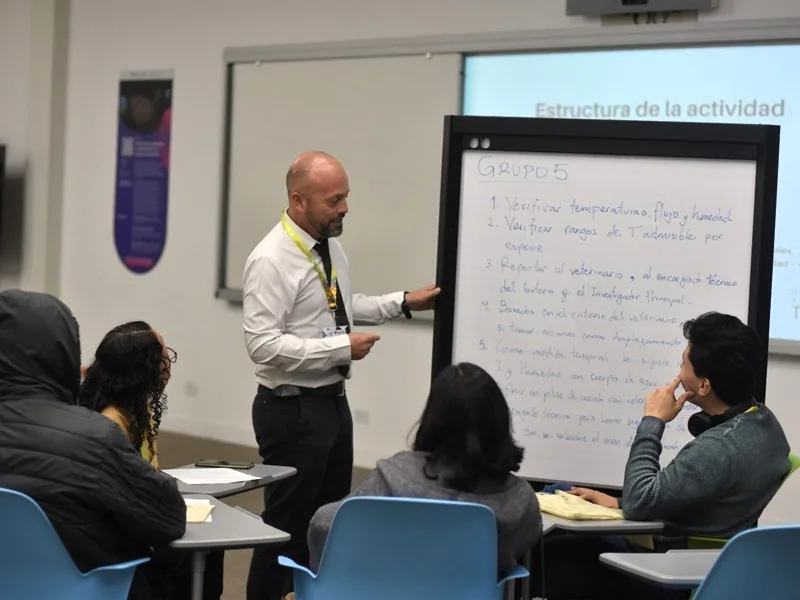
In this instance, the director of the FCV-USS veterinary area and professor at the Faculty of Veterinary Medicine, Dr. Sebastián Valenzuela, along with the deputy director of the area, MSc. Micaela Ricca, participated as guest speakers, contributing their expertise in emergency management in vivariums and animal welfare in scientific research contexts.
The meeting was organized by Animalcore–Uniandes, with the support of the Asociación Colombiana para la Ciencia y el Bienestar de Laboratorio , convening professionals, technicians, and academics from various Latin American countries, with the goal of strengthening institutional capacities for prevention, response, and recovery from crises affecting research animals, considering ethical, legal, operational, and human-animal welfare dimensions.
During the program, topics such as emergency planning and prevention, crisis management, post-crisis preparation and recovery, continuous staff training, and case study analysis were addressed, along with interdisciplinary discussion panels aimed at identifying challenges and opportunities in emergency management in animal science.
Academic contribution and international collaboration outlook
Dr. Valenzuela led the module "Crisis Management: Rapid and Effective Response," where he presented a strategic perspective based on international standards, addressing the coordination of multidisciplinary teams, the application of operational protocols, and decision-making in critical scenarios involving laboratory animals. Likewise, he participated in the meeting's round tables, contributing to the collective analysis of regional experiences and best practices.
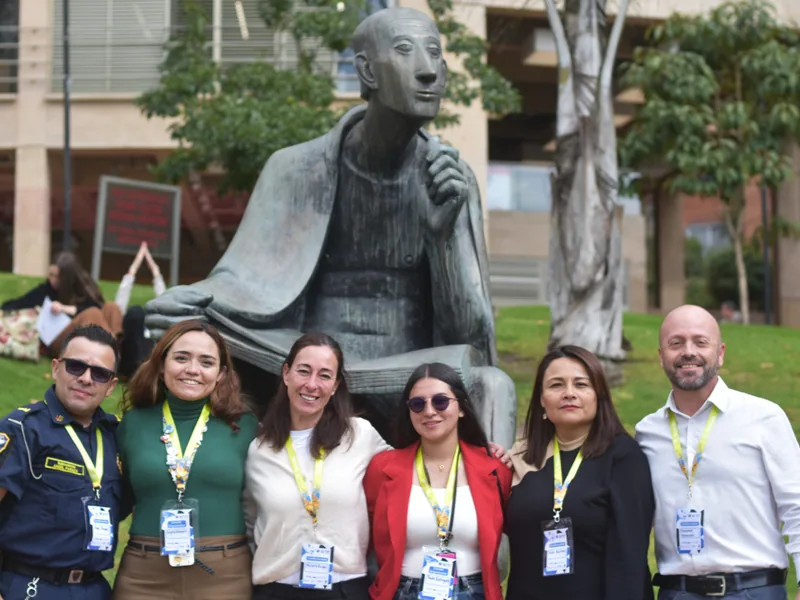
In addition to their participation as speakers, the USS representatives toured the facilities of the Universidad de los Andes and held a working meeting with Dr. Keydy Vásquez Romero, institutional veterinarian and MV Animalcore coordinator of the Vice-Rectorate for Research and Creation at UniAndes.
The meeting addressed topics of common interest, such as faculty mobility, the strengthening of the current agreement between both institutions, and potential collaboration in university teaching research.
The participation of the USS in this international meeting is part of its academic internationalization strategy, promoting knowledge exchange, regional cooperation, and the development of networks that contribute to strengthening training, research, and best practices in animal welfare and laboratory science, with a long-term outlook for the USS academic community.