
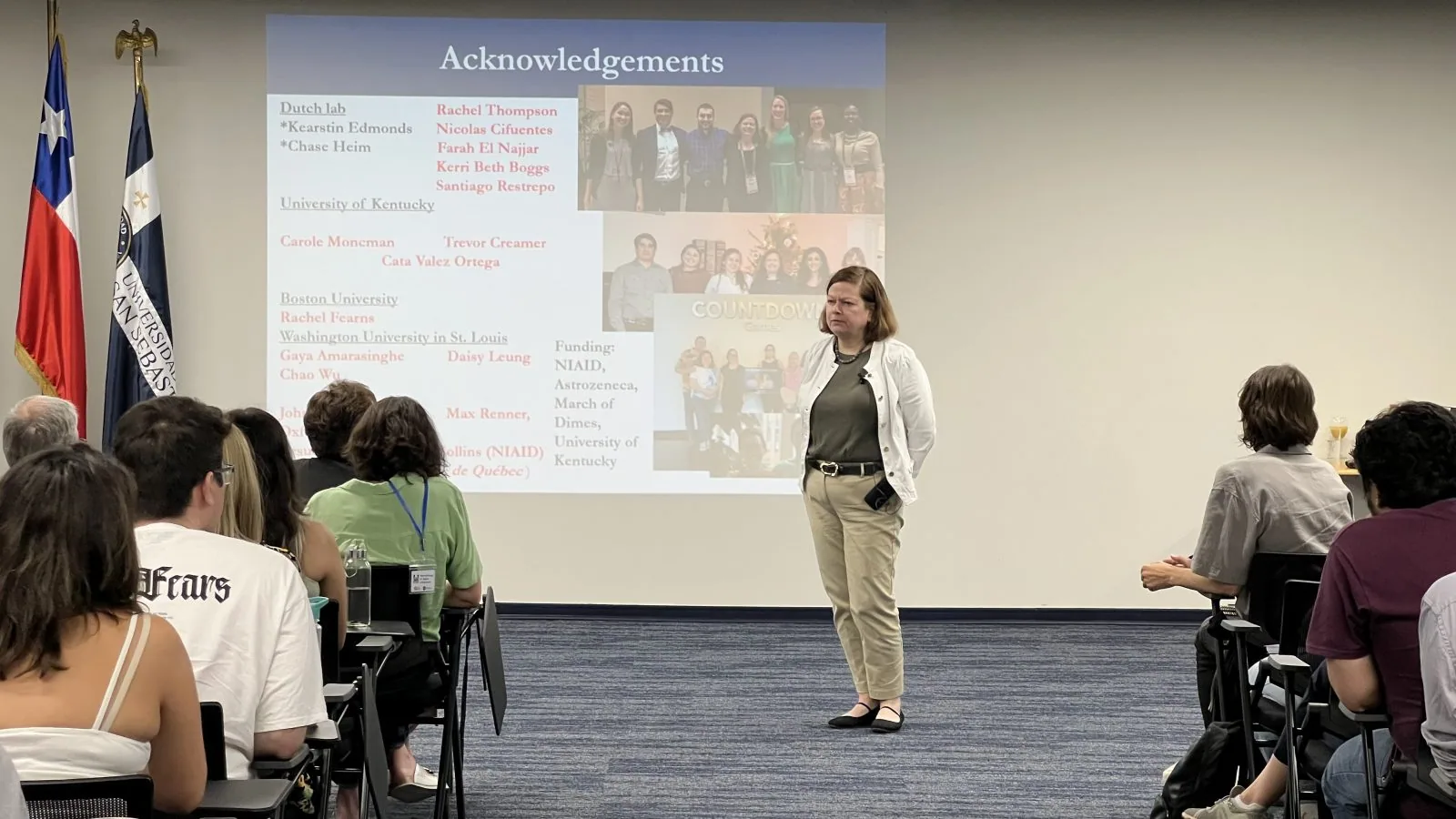
Dr. Rebecca Dutch, a prominent academic and Vice Dean for Research at the University of Kentucky College of Medicine in the United States, held a seminar on the molecular factors underlying respiratory virus infection. The event, which brought together researchers and students from the Centro Ciencia & Vida (FCV-USS), took place at the Science, Innovation, and Entrepreneurship Park (PACIE) facilities of the Universidad San Sebastián at the Campus Ciudad...
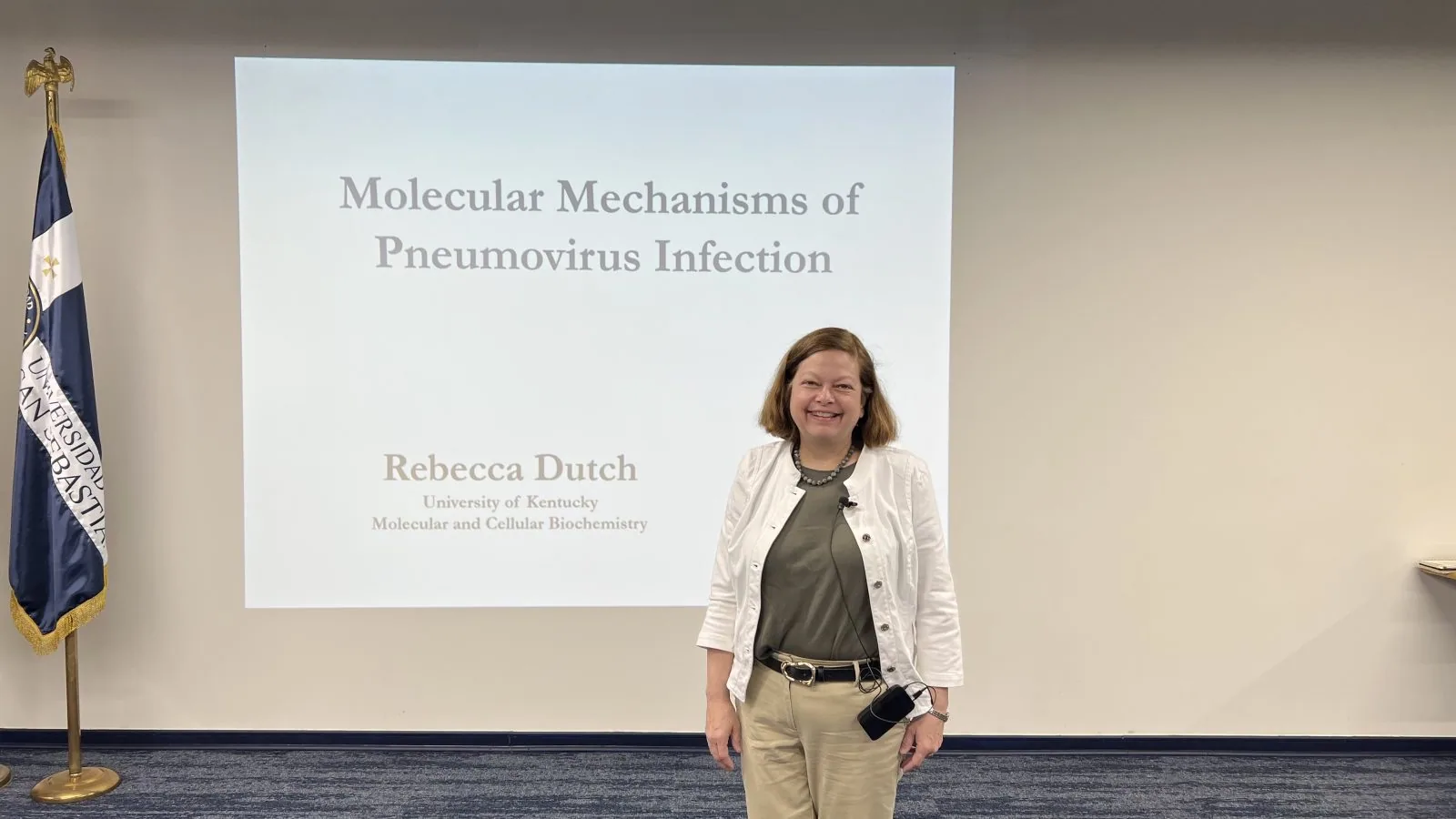
Dr. Rebecca Dutch, a prominent academic and Vice Dean for Research at the University of Kentucky College of Medicine in the United States, held a seminar on the molecular factors underlying respiratory virus infection.
The event, which brought together researchers and students from the Centro Ciencia & Vida (FCV-USS) and was held at the Science, Innovation, and Entrepreneurship Park (PACIE) facilities of the Universidad San Sebastián at the Campus Ciudad Universitaria , focused on the molecular mechanisms of respiratory virus infection, with an emphasis on Respiratory Syncytial Virus (RSV) and Human Metapneumovirus (HMPV).
Dr. Dutch, an authority in virology with over two decades of experience studying respiratory viruses, shared recent findings from her team regarding viral replication dynamics and the molecular factors involved in the infectious processes of these pathogens.
In her presentation, Dr. Dutch also addressed topics such as the global response to pandemics and the pandemic potential of certain respiratory viruses. Regarding the increase in HMPV cases recently reported in China, she emphasized that as long as this virus does not undergo major genomic changes, the risk of the virus causing a large-scale pandemic “is very low,” highlighting the importance of continuing studies on this virus to better understand its behavior and public health impact.
Additionally, she presented innovative microscopy approaches revealing how protein-protein interactions contribute to the life cycle of both viruses. She also noted that lessons learned from previous pandemics, such as SARS-CoV-2, provide a framework for responding to future challenges.
The seminar also addressed the global impact of these respiratory viruses, underlining their relevance to public health, especially in vulnerable populations such as young children, older adults, and immunocompromised individuals, as well as in immunocompetent adults presenting with respiratory virus co-infections. Dr. Dutch stressed the need to expand research in this field to develop effective prevention and treatment strategies, emphasizing that although these viruses have received less attention compared to others like influenza, they represent a significant challenge for health services.
Visit to Chile
Following her presentation, she highlighted that “students and colleagues are what make science thrive. Students around the world are the future of our success in the fight against diseases.” This message emphasizes the importance of international collaboration and the enthusiasm of new generations in scientific research.
Asked about her visit to Chile, in the context of Congreso Futuro , she indicated that her talk at that event is aimed at the general public and analyzes the impact “of pandemics and how we fight them; we see how studies help us understand them.”
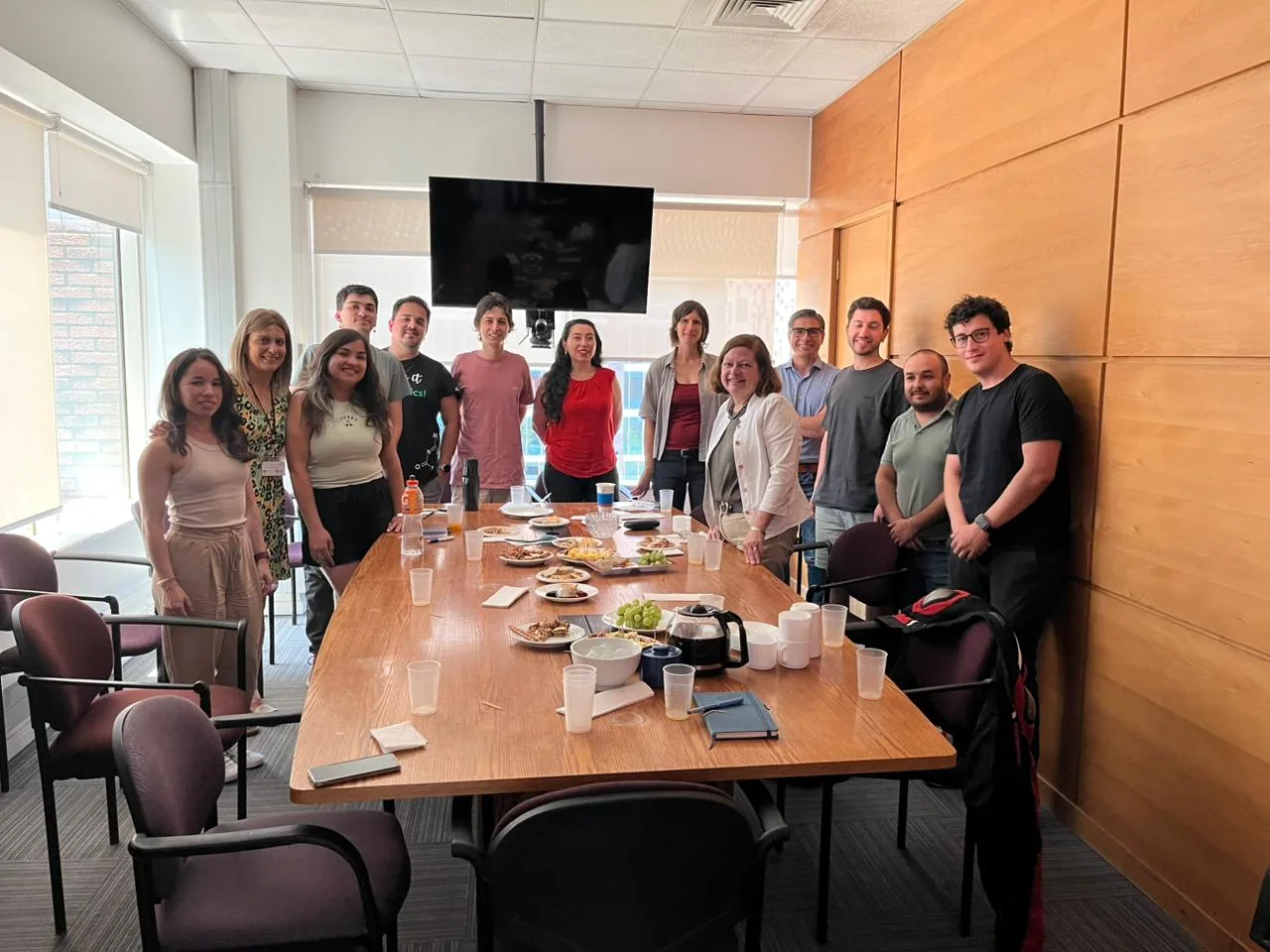
The activity, organized by Dr. Nicolás Cifuentes, who completed his postdoctoral fellowship in Dr. Dutch’s laboratory, and the principal investigator of the Centro Ciencia & Vida at USS, Dr. Nicole Tischler, promotes the idea of creating a space for dialogue and scientific exchange between the center's community and international experts, reinforcing the mission of this institution in favor of the advancement and dissemination of knowledge in biomedicine.
“This type of meeting with highly specialized experts in related fields is fundamental for the training of our students, considering that for equivalent instances, such as attending specialized international conferences, funding is only achieved for a small group of them,” concluded Dr. Tischler.
“It is a privilege to have Dr. Dutch in our country and for her to share with undergraduate, graduate, and even school students. Furthermore, being connected with researchers seeking to understand viruses and their infection mechanisms at the cellular and molecular level helps us be better prepared for future pandemics caused by viruses,” stated Dr. Nicolás Cifuentes.