
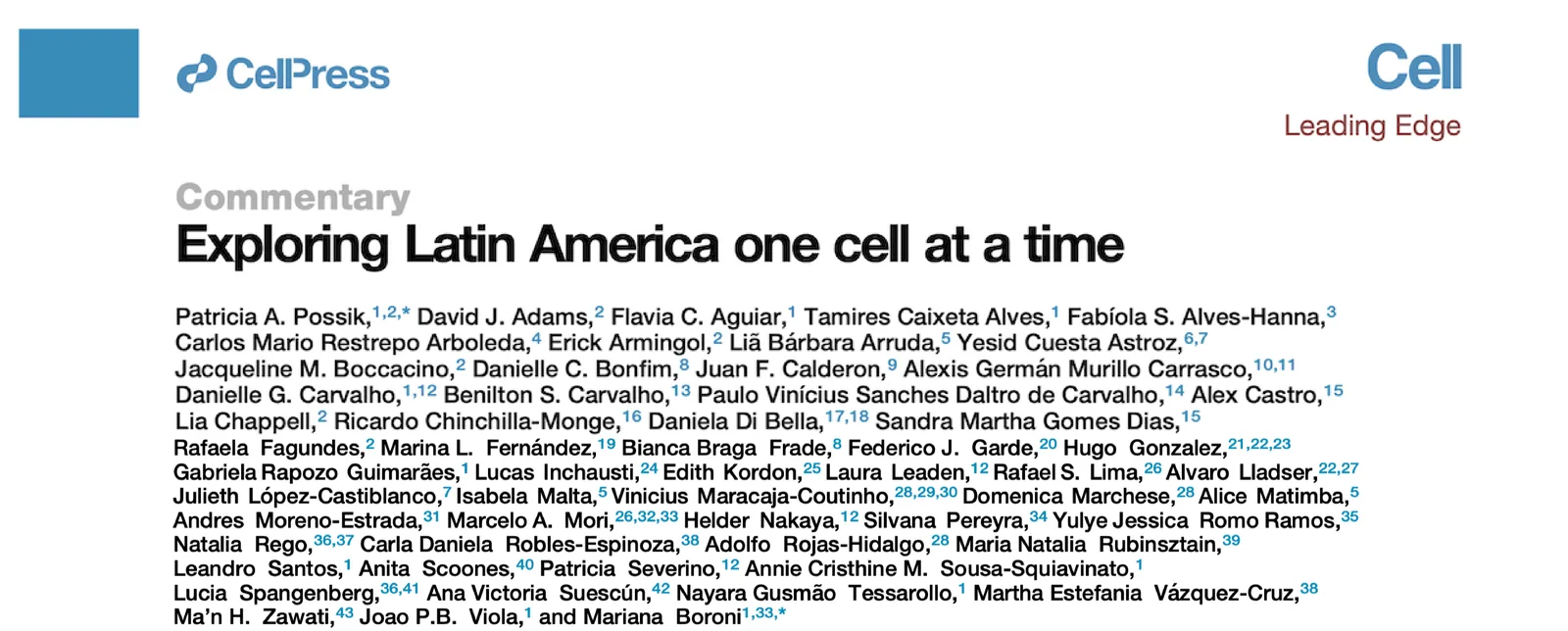
The article "Exploring Latin America one cell at a time", recently published in the journal Cell, highlights the transformative role that single-cell transcriptomics and spatial transcriptomics technologies are having globally and their potential impact in Latin America.
The article "Exploring Latin America one cell at a time", recently published in the journal Cell, highlights the transformative role that single-cell transcriptomics and spatial transcriptomics technologies are having globally and their potential impact in Latin America. This collaborative work brought together researchers from the region, including Dr. Álvaro Lladser, director of the Centro Basal Ciencia & Vida (FCV-USS), and Dr. Hugo González, a researcher at the same center; both academics from the Universidad San Sebastián.
These technologies analyze the transcriptional profile of each cell individually and map it within tissues, allowing for a full understanding of the biological processes occurring in each cell and how they communicate with each other, which is why these methodologies are revolutionizing biology and medicine.
Dr. Álvaro Lladser points out that from the Centro Basal Ciencia & Vida "we have promoted the implementation of these technologies, which consolidates us as a national and Latin American benchmark in single-cell studies, and we hope to achieve national and regional integration." In this regard, he highlights that the center has promoted advanced training opportunities that strengthen local capacities and regional and international networks, such as the advanced course “Bioinformatic analysis of single cell RNA sequencing data applied to immunology” (Santiago, 2022); the Franco-Australian courses on bioinformatics applied to immunology (Buenos Aires, 2024; Córdoba, 2025); and the advanced course “Bioinformatics analysis of spatial biology data” (Santiago, 2026).
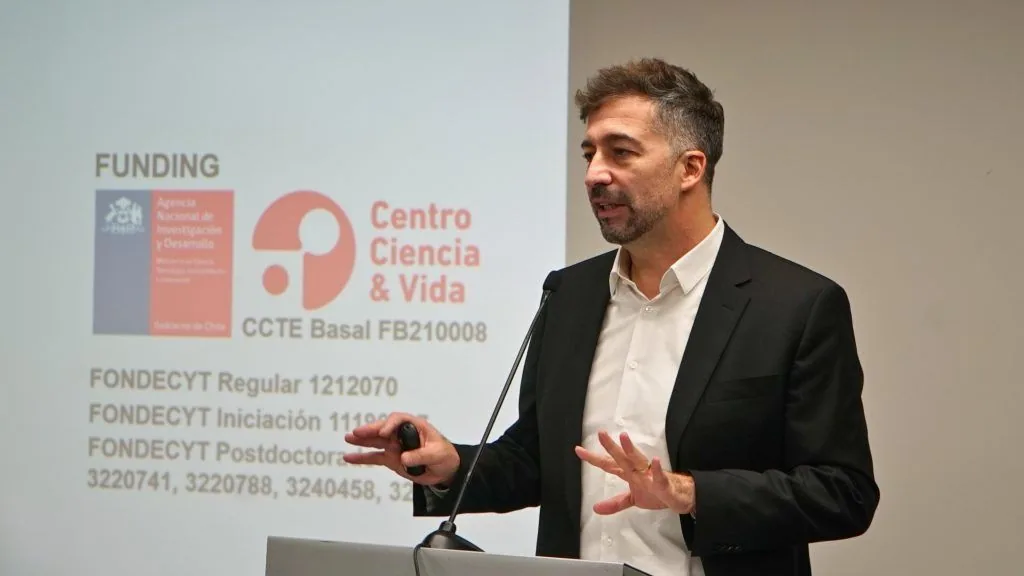
In this sense, the Centro Basal Ciencia & Vida has also developed a web platform that allows for the analysis of single-cell transcriptomics data in a simple way for individuals without bioinformatics training: https://apps.cienciavida.org/scexplorer/ . These initiatives aim to broaden access to these types of technologies for the entire scientific community, through the analysis of their own data or publicly available data, as well as to prepare the Latin American community to leverage the potential of single-cell science.
The work published in Cell addresses the challenges involved in implementing these technologies in the region, while proposing concrete courses of action for Latin America to advance in technologies that are already changing biomedical research worldwide. Their application in Latin America opens high-impact questions derived from the genetic and environmental diversity of its communities and the presence of historically understudied endemic diseases.