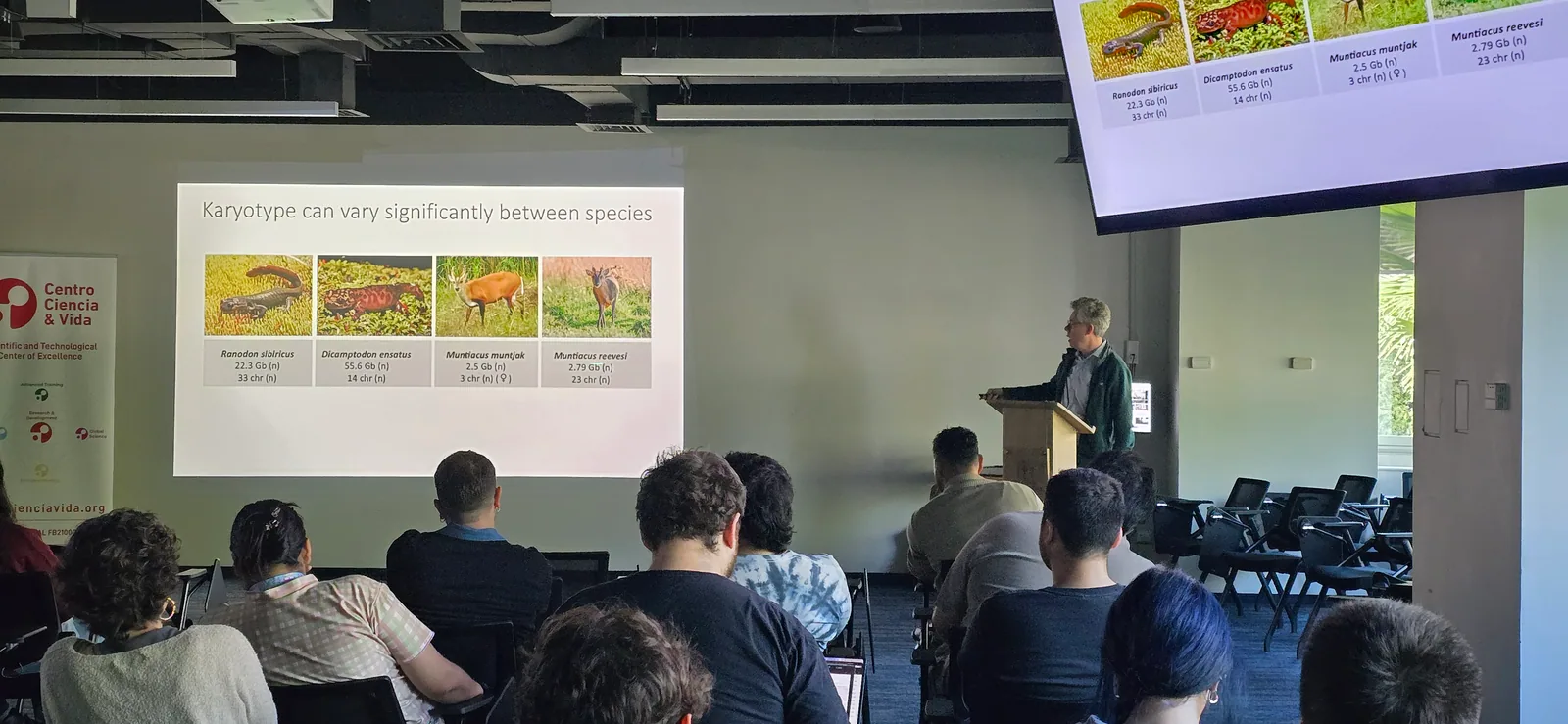

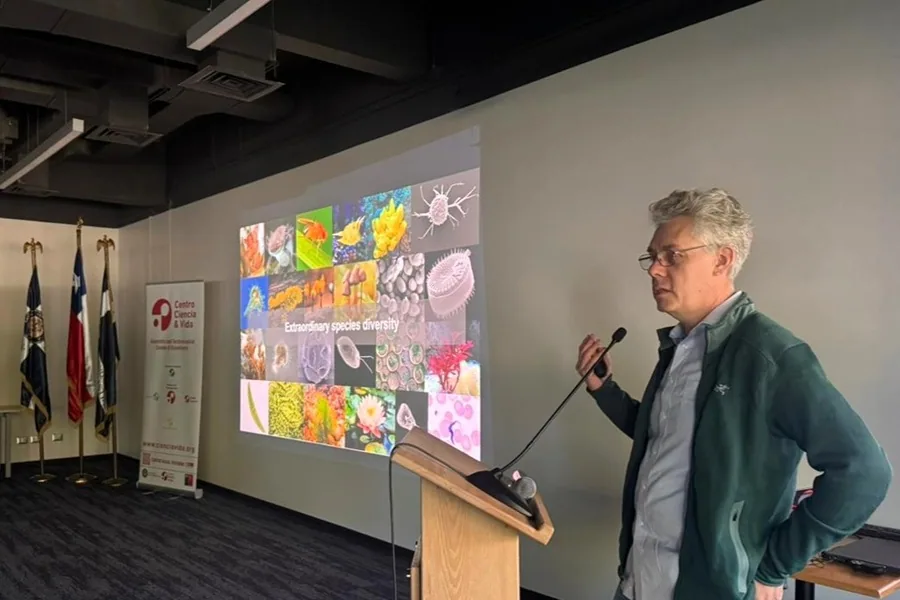
Researcher Dr. Gavin Sherlock, from Stanford University, completed an academic residency during March at Universidad San Sebastián, an instance that included a lecture aimed at doctoral students at the Campus Ciudad Universitaria.
Within the framework of a research residency at Fundación Ciencia & Vida - Universidad San Sebastián, the academic from the School of Medicine at Stanford University , Dr. Gavin Sherlock, delivered the seminar “Evolution at the centromere kinetochore interface,” as part of the "Open Science" seminar series of the Centro Basal. The activity brought together the scientific community and doctoral students from various institutions.
Dr. Sherlock is a Professor of Genetics at Stanford University and a member of interdisciplinary initiatives such as Bio-X and the Stanford Cancer Institute . His research focuses on adaptive evolution, particularly on how beneficial mutations emerge and propagate in yeast populations under selective pressure, contributing to the understanding of fundamental processes in evolutionary biology and genetics.
During his stay, the academic highlighted the collaborative work and research lines developed in Chile, particularly regarding yeast diversity and evolution. "I have greatly enjoyed talking with students and postdocs, and seeing how the different projects connect around topics such as diversity, population genetics, and yeast evolution, with a particular focus on species present in Chile," he noted.
Likewise, he valued the scientific contribution of local teams, highlighting the discovery of new species such as Saccharomyces chiloensis, which evidences the potential of research in areas of molecular biology and evolutionary genetics.
Held in the auditorium of the Campus Ciudad Universitaria of Universidad San Sebastián, the seminar, led by Dr. Francisco Cubillos, associate researcher at the Centro Basal Ciencia & Vida, brought together participants from USS, Pontificia Universidad Católica de Chile, Universidad de Chile, Universidad de Santiago, and Universidad Mayor, among others, and allowed for the strengthening of scientific exchange and the generation of international collaboration opportunities, including the participation of students from the PhD in Biotechnology and Entrepreneurship at USS.
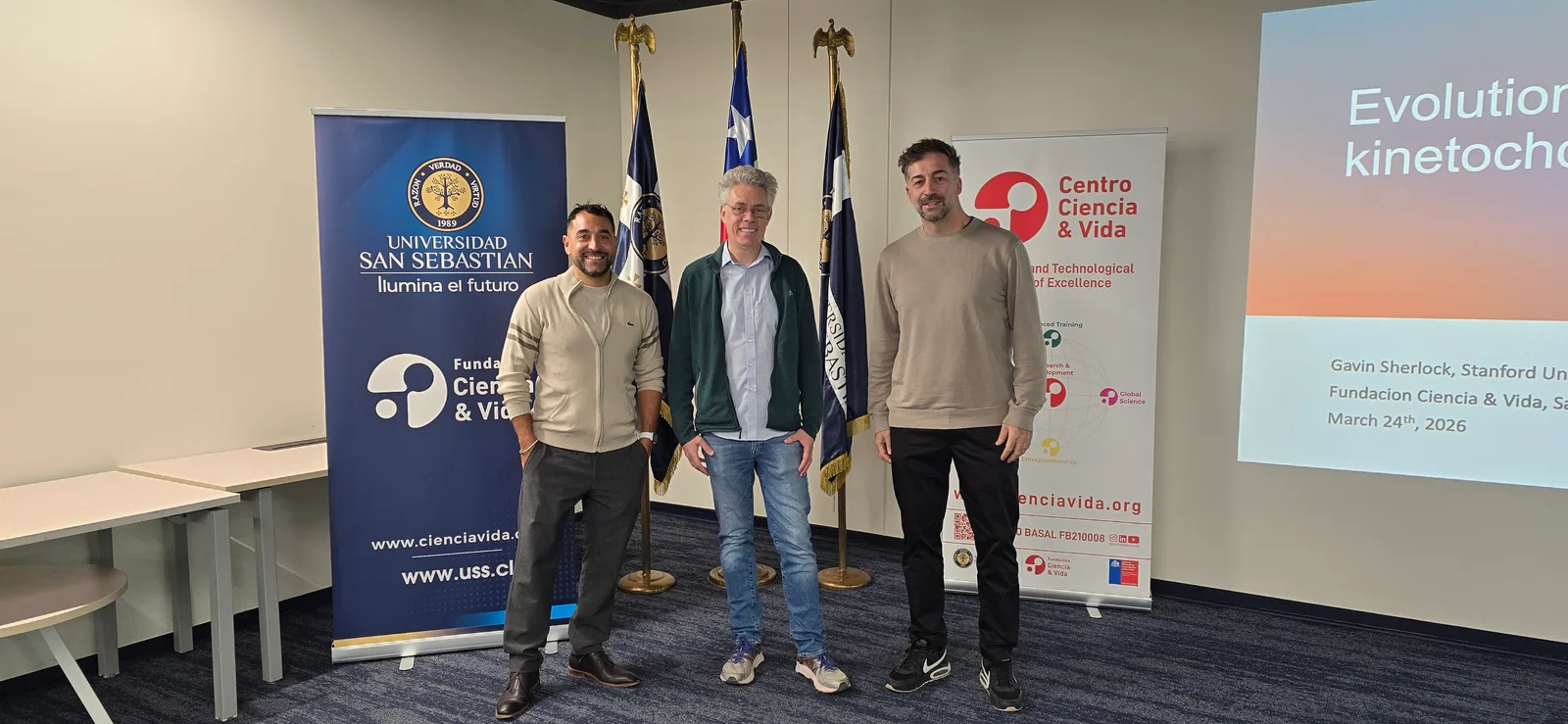
Scientific exchange and international projection
In his lecture, Dr. Sherlock addressed the mechanisms regulating cell division, with an emphasis on the evolution of the interface between the centromere and the kinetochore, key structures for correct chromosome segregation.
"We are trying to understand how the cell division machinery evolves and what constraints this process faces. It is a fundamental mechanism that explains how a cell divides into two and has implications for phenomena such as tissue regeneration or the development of diseases like cancer," he explained.
Likewise, he highlighted the value of yeast as a biological model to study evolutionary processes: "These organisms allow us to analyze how certain sequences change over time and how that impacts essential cell functions."