
Every April 29, the International Day of Immunology is commemorated, a date that seeks to highlight the contribution of this discipline to the understanding of the immune system and its impact on human health.
Every April 29, the International Day of Immunology is celebrated, a date that seeks to highlight the contribution of this discipline to the understanding of the immune system and its impact on human health.
From the study of infections and inflammatory diseases to the development of new strategies against cancer and neurodegenerative pathologies, immunology has established itself as a key field for connecting basic science, biomedical innovation, and social well-being.
At the Centro Ciencia & Vida, of the Fundación Ciencia & Vida and the Universidad San Sebastián, various lines of research address fundamental questions about how the immune response is activated, regulated, and reprogrammed in disease contexts.
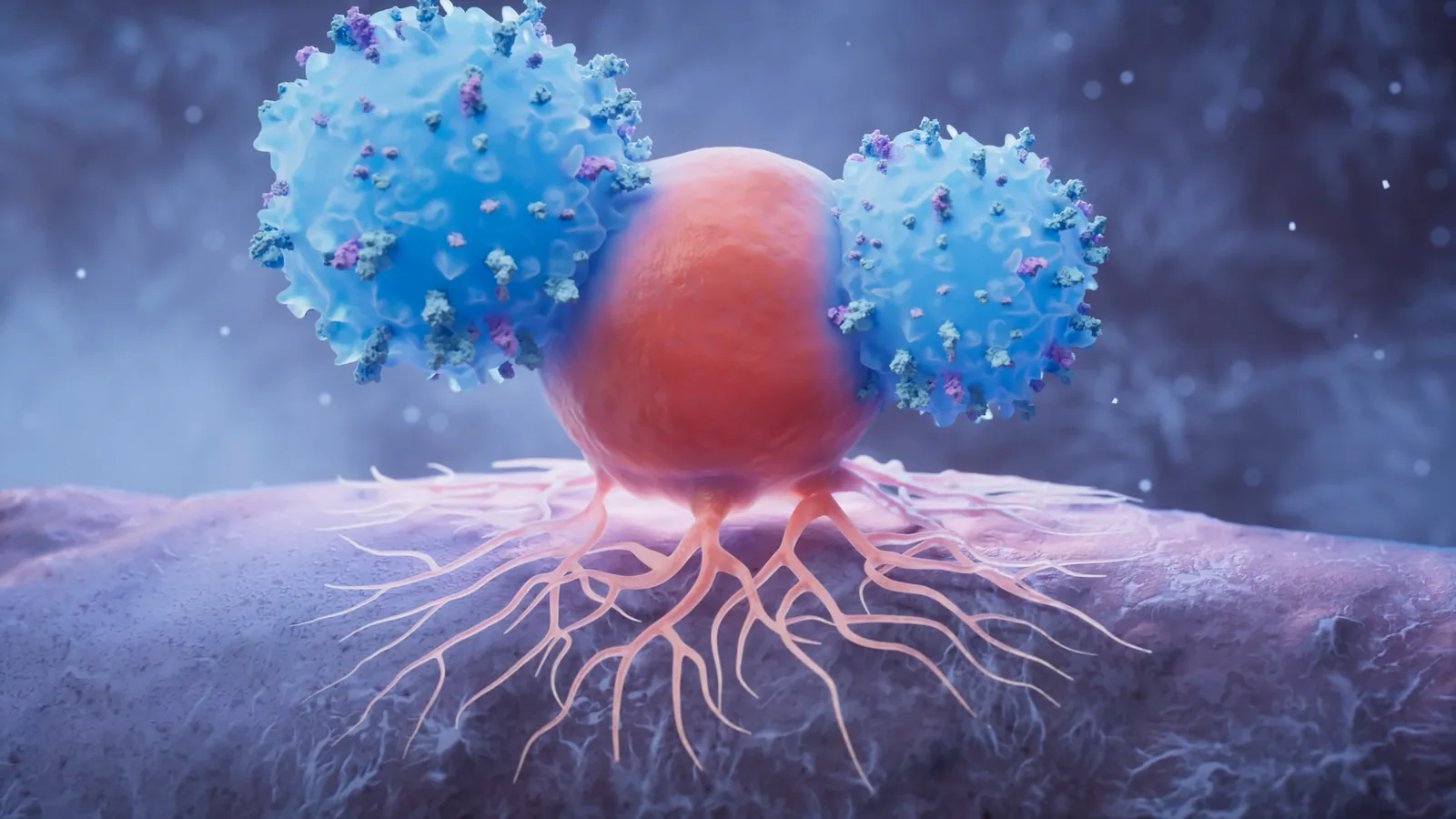
One of these areas is led by Dr. Álvaro Lladser, director of the Basal Center and USS academic, whose immuno-oncology laboratory studies the role of T cells in the antitumor response. His research seeks to understand how these cells recognize and attack tumors, and how this knowledge can contribute to the design of more effective immunotherapies . Among his recent lines of research, the study of regulatory T cells and their participation in immunotherapy-induced immunity against cancer stands out, with the aim of understanding their possible contribution to the formation of immunological memory and the optimization of oncological treatments.
In this same vein, the Center has promoted research on the tumor immune microenvironment. Recently, members of Dr. Lladser's laboratory were selected in ANID 2026 competitions with projects focused on the analysis of clinically relevant immune archetypes in renal carcinoma and the functional and spatial organization of resident memory CD8+ T cells in breast cancer and metastatic lymph nodes. These approaches integrate tools such as single-cell sequencing, spatial transcriptomics, and advanced computational analysis to better understand the relationship between the immune system, tumor progression, and therapeutic response.
For his part, Dr. Mario Rosemblatt , principal investigator at the Center, has been a key figure in the development of immunology in Chile and the consolidation of scientific capabilities in this area. His career has been linked to the study of the immune response and the training of new generations of researchers, contributing to establishing a perspective that connects basic research, biomedicine, and institutional development.
Similarly, Dr. María Rosa Bono has promoted a line of research aimed at understanding the cellular and molecular mechanisms that regulate the immune response. Her work has contributed to the study of processes linked to the differentiation and function of immune cells, as well as the understanding of phenomena associated with inflammation, immunological tolerance, and autoimmune diseases such as lupus. From this perspective, her research strengthens knowledge on how the immune system maintains the body's balance and what happens when this regulation is altered.
Another relevant line is developed by Dr. Rodrigo Pacheco , who investigates the relationship between the immune system, microbiota, and neurodegenerative diseases. His studies have contributed to understanding how immune cells can influence central nervous system processes and how certain bacterial metabolites could modulate inflammatory responses and symptoms associated with diseases such as Parkinson's. In his Fondecyt Regular 2025 project, the researcher analyzes the role of the GPR43 receptor in the interaction between T cells and microbiota in Parkinson's disease, with special attention to the perception of chronic pain, one of the most debilitating non-motor symptoms of this pathology.
Furthermore, collaborative work at the Basal Center allows for joint research on autoimmune and inflammatory diseases, with projects involving various scientists, such as Rodrigo Pacheco, Carolina Prado, and María Rosa Bono, for example, seeking to understand the mechanisms that lead the immune system to attack its own tissues, as well as the molecular processes that sustain inflammation and the loss of immunological tolerance. In this sense, Dr. Carolina Prado studies the role of the microbiota in the transit of intestinal immune cells to the central nervous system, focusing on multiple sclerosis, an autoimmune disease for which there is still no cure.
Immunology also intersects with the Center's work in virology. In the laboratory of Dr. Nicole Tischler , research on hantavirus has allowed for progress in understanding the infection mechanisms of the Andes virus, providing evidence on possible therapeutic intervention strategies against hantavirus.
In this way, the Centro Ciencia & Vida (FCV-USS) reaffirms its commitment to excellence in immunological research, capable of generating new knowledge about complex diseases and, at the same time, projecting applications in diagnostics, advanced therapies, biotechnological innovation, and public health.
On the Day of Immunology, the Center recognizes the work of researchers, students, and technical teams who contribute to expanding the frontiers of this discipline from Chile.