

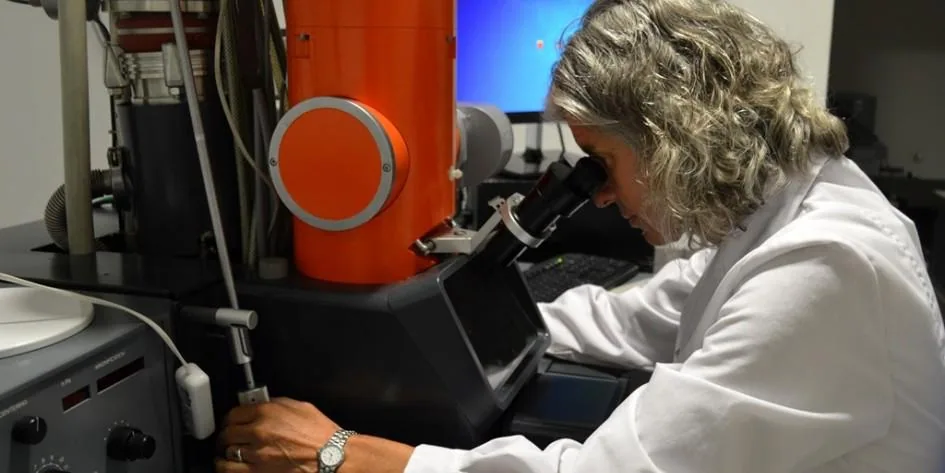
Scientists explore the interaction between proteins and RNA in pathogens affecting the food industries of both countries.
The project integrates computational modeling and experimental virology to study infections with economic impact, including infectious pancreatic necrosis and Gumboro disease.
The results could provide foundational knowledge for future vaccines or treatments, highlight the lead researchers: virologists Laura Delgui and Andrea Rivas, along with biophysicist Simón Poblete.
A collaboration between researchers from Chile and Argentina seeks to understand how certain RNA viruses affecting animal-based food production replicate. The project brings together capabilities in virology and computational modeling to study, at a molecular level, the interaction between viral proteins and the genetic material they contain.
The work focuses on agents such as infectious pancreatic necrosis (IPNV), which affects salmon, and Gumboro disease, which impacts poultry. These have significant production consequences, particularly in salmon farming, where viral infections represent a significant source of losses.
According to the researchers, from the Universidad Nacional de Cuyo in Argentina, and Universidad San Sebastián and Centro Ciencia & Vida (of the Fundación Ciencia & Vida and USS in Chile), the study's focus is not on the external detection of microorganisms, but on understanding the internal mechanisms that drive their replication within cells. This involves analyzing how they use cellular components to multiply and spread.
The initiative combines the experimental work of virologists with advanced computational simulations, allowing for the exploration of processes that cannot always be observed directly in the laboratory. This multidisciplinary approach seeks to generate models that explain viral behavior under different conditions.
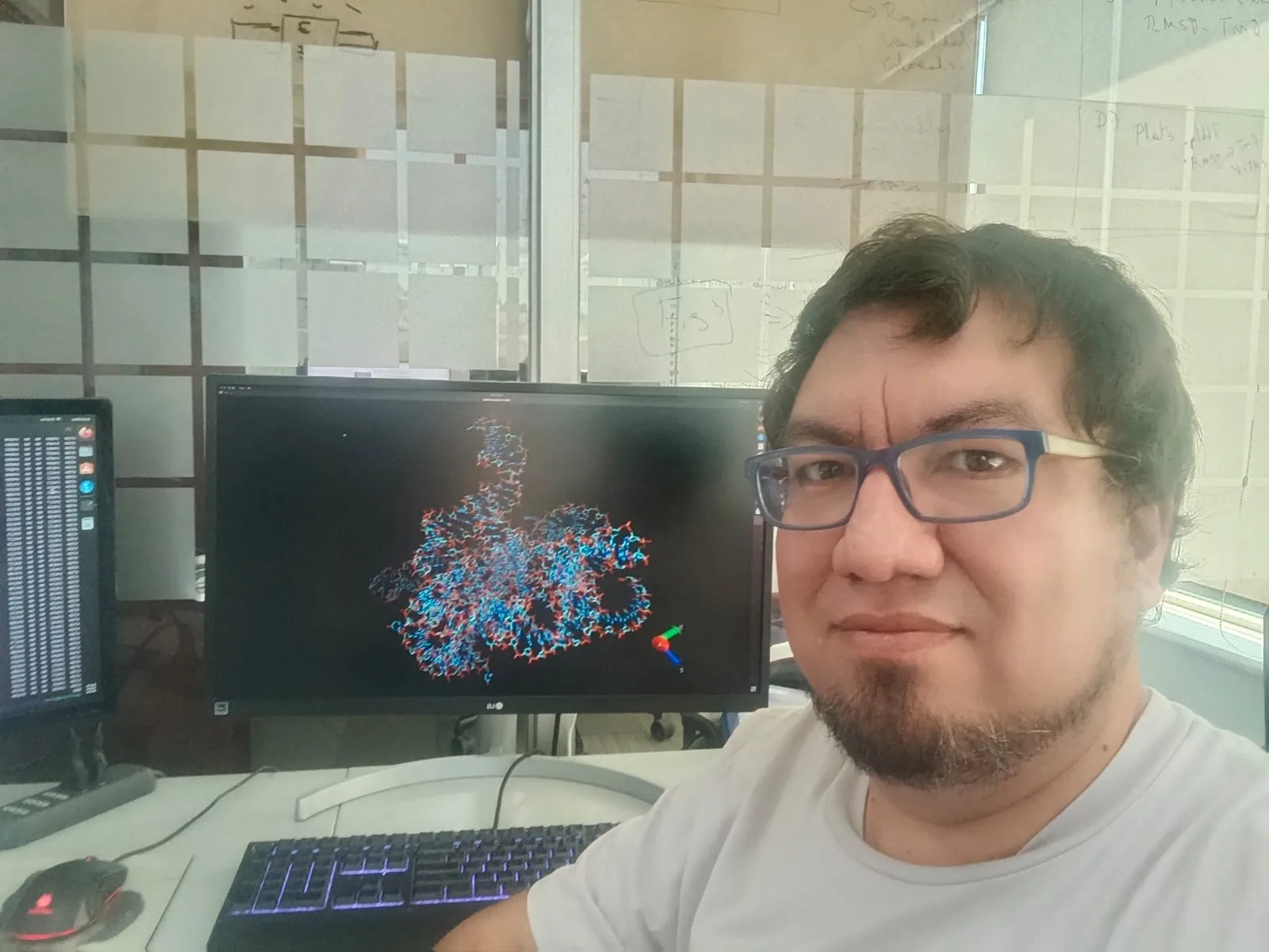
Chilean biophysicist Simón Poblete, associate researcher at the Centro Basal Ciencia & Vida and USS academic (in charge of computational models), Chilean virologist Andrea Rivas (from the USS Faculty of Science), and Argentine virologist Laura Delgui (who heads the Laboratory of Interaction of Viral Agents with Cellular Membranes in her country) are the leaders of the exploration.
“We seek to understand molecular aspects of replication cycles, particularly those with a genome composed of RNA, because it is necessary to first understand the mechanisms involved in pathogenesis before considering an application,” noted Dr. Delgui during a conference held in Santiago, Chile.
In Chile, the economic impact of viruses like IPNV is part of a key industry representing about 1.7% of the national GDP (approximately USD 4,650 million), so health outbreaks have direct effects on employment, exports, and regional production. Previous crises, such as the ISA virus, caused the loss of more than 15,000 jobs and a drop of up to 20% in exports, in addition to the closure of production centers.
Globally, IPNV causes high mortality rates in salmon that can exceed 90% in early stages, along with significant losses in aquaculture. In this context, both in Chile and Argentina—where associated scientific research is conducted—the impact is not only sanitary but also economic and strategic for these food-exporting industries.
Strategic Industries
Food production is positioned as a strategic sector in both Chile and Argentina, where activities such as aquaculture, poultry farming, and livestock play a central role in the economy and exports. The presence of viral diseases in these production systems affects the functioning of entire value chains.
To help mitigate the impacts of potential outbreaks, the study led by academics from Universidad San Sebastián and Universidad Nacional de Cuyo includes viruses affecting animal production, particularly in the aquaculture industry.
In Chile, the infectious pancreatic necrosis agent affects several salmon species, making it a significant problem for the sector.
Data presented by scientists from Centro Ciencia & Vida indicate that about 30% of salmon die annually due to these types of infections, generating significant economic consequences. This scenario has driven the search for new ways to understand viral behavior, especially considering that Chile is the second-largest global producer.
In this sense, these are microorganisms that affect both livestock and fish crops, extending their impact beyond a single production sector. Their presence in intensive production systems favors rapid spread, amplifying their effects on food chains.
Biophysicist Simón Poblete explains that the study focuses on understanding the viral replication process and the role of proteins in RNA duplication, with the goal of identifying points where it is possible to interfere with this mechanism.
To this end, molecular interactions of the virus are analyzed under different conditions, including temperature variations between host species. “The collaboration focuses on a fundamental aspect of certain structures we are working on, so we can characterize their role and establish a parallel between them.”
This approach makes it possible to compare pathogens operating under different conditions, such as those infecting salmon in environments near 17 degrees and others affecting birds at temperatures above 36 degrees, which introduces relevant differences in their biological behavior.
In Argentina, viral diseases also represent a challenge for strategic sectors such as poultry farming and emerging aquaculture, where outbreaks can affect productivity, animal health, and access to international markets. Circulation in intensive production systems necessitates strengthening sanitary surveillance and developing scientific knowledge to anticipate and mitigate their impact on food chains.
Dr. Laura Delgui adds: “It is necessary to first understand the mechanisms involved in the pathogenesis of a virus before being able to think about an application.”
Computational Simulations
Dr. Laura Delgui will focus her work on infectious bursal disease—known in the poultry industry as Gumboro—a viral pathology affecting young chickens worldwide. The causative agent is the IBDV virus, which directly attacks the birds' immune system, weakening their response to other infections.
“We are focused on understanding molecular aspects of viral replication cycles, particularly those with a genome composed of RNA,” said the academic from the Universidad Nacional de Cuyo, who highlighted that, to advance this understanding, one of the pillars is the use of computational tools to simulate the interaction between viral molecules.
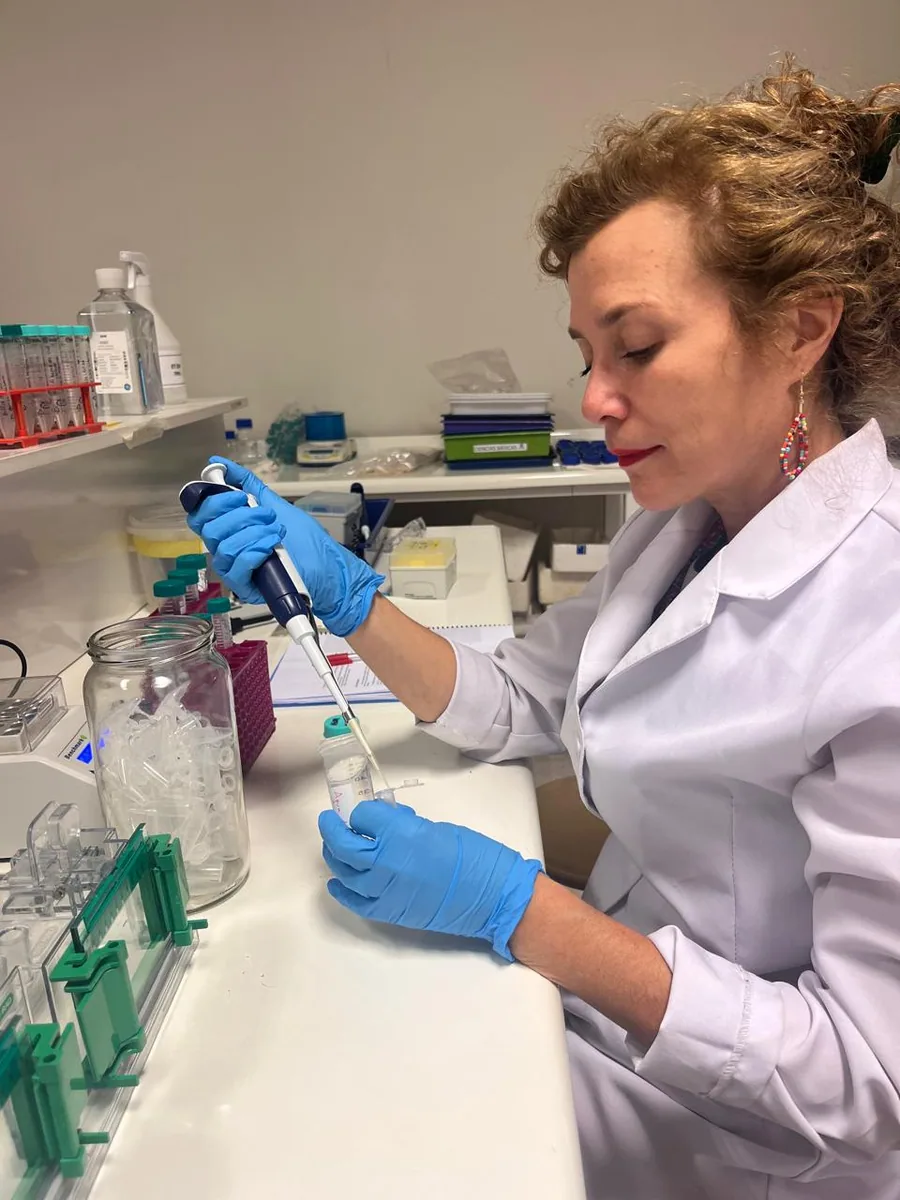
For her part, Dr. Andrea Rivas will focus on infectious pancreatic necrosis (IPN), a viral disease that mainly affects salmon in early stages of development, both in farming systems and natural environments. The causative agent is the infectious pancreatic necrosis virus (IPNV), a highly resistant pathogen in the aquatic environment, which facilitates its spread in farming centers.
These simulations help observe how RNA and proteins behave under controlled conditions. However, current techniques have significant limitations as they only work with small systems, restricting analysis to RNA fragments or a small number of proteins.
To overcome these restrictions, researchers develop simplified models that group thousands of atoms into more manageable units. This allows for the simulation of larger systems and approaches conditions closer to reality. “Molecular dynamics has a limitation in system size; simulations are restricted to a few molecules, so we design models where objects are groups of atoms representing thousands of them,” Poblete notes.
This modeling requires integrating knowledge of physics, chemistry, and biology, while respecting the properties of the molecules they represent. From these simulations, they can propose scenarios on how proteins and RNA are organized within the pathogen. Additionally, they explore collective phenomena, such as how multiple proteins interact with each other or how RNA folds to adapt to confined structures.
Scientists point out that understanding these processes is crucial for identifying critical points where intervention could limit infection. This includes analyzing the role of proteins in RNA replication and their interaction with the host cell. Along these lines, the long-term goal is to contribute to the development of tools such as vaccines or treatments, although current work focuses on generating the necessary knowledge for this.
Together, the potential results seek to provide a deeper understanding of RNA viruses, with implications for both animal production and human health in the future, in a context where viral diseases continue to be a global challenge.
“Our expectation is to contribute a solution to a problem, such as a vaccine or a treatment, but we are at the stage of generating that basic knowledge,” concludes the scientist from the Universidad Nacional de Cuyo, who emphasizes that multidisciplinary collaboration has been key to advancing these types of questions, integrating different methodologies and perspectives to address a complex challenge for the health and economy of both countries.
Text by Luis Francisco Sandoval, S&M Comunicaciones Agency.