
Centro Ciencia & Vida (FCV-USS) was the only national institution of its kind invited to the meeting, which brought together representatives from international scientific organizations and national scientific societies at the Chilean Academy of Sciences.
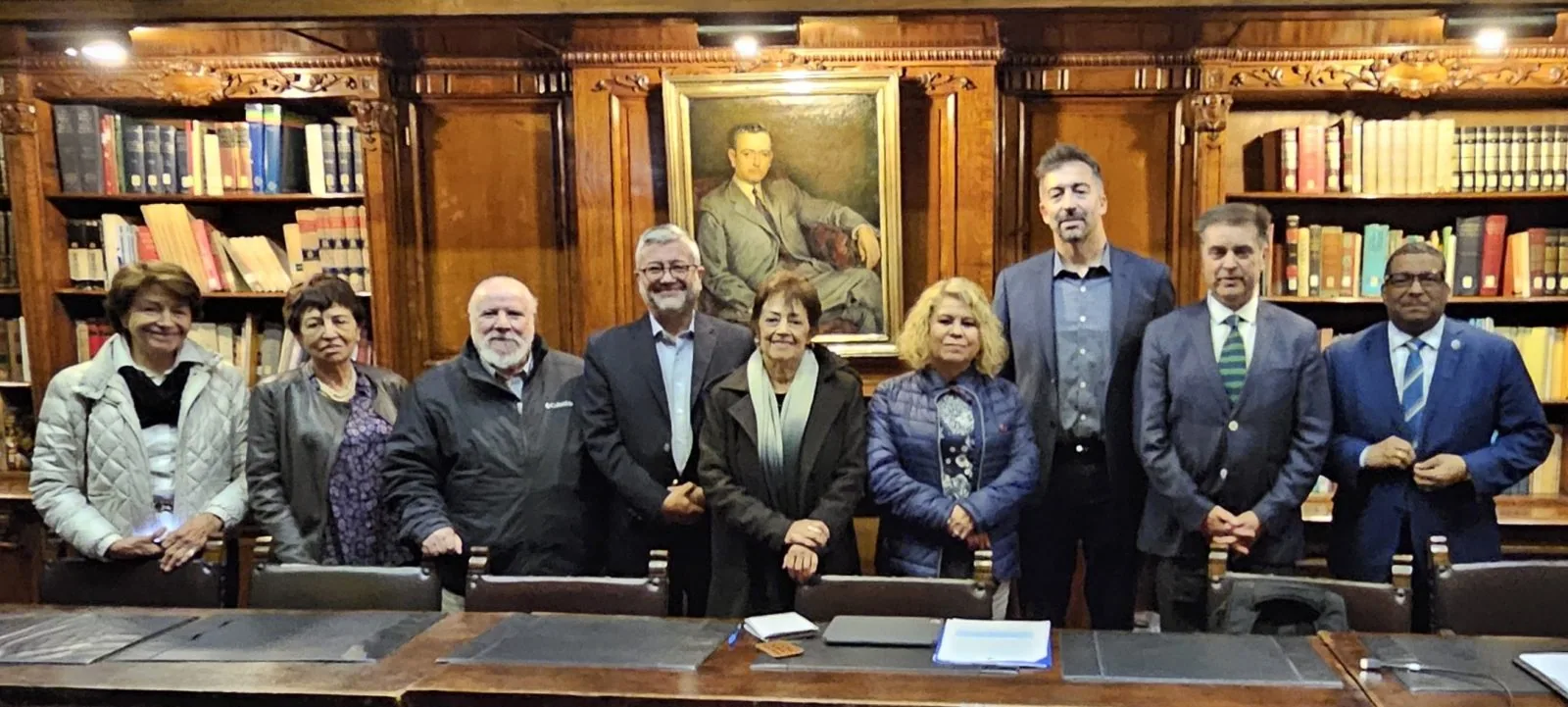
Between June 2 and 4, 2025, Santiago hosted the annual meeting of the Liaison Committee of the Regional Focal Point for Latin America and the Caribbean of the International Science Council (ISC RFP-LAC), an international advisory body to the United Nations on scientific issues of global relevance.
Centro Ciencia & Vida (FCV-USS) was the only national institution of its kind invited to the meeting, which brought together representatives from international scientific organizations and national scientific societies at the Chilean Academy of Sciences.
The meeting brought together twelve international delegates from renowned Latin American scientific academies and institutions, who addressed priority topics such as science for sustainable development, science diplomacy, and the promotion of international and regional research cooperation.
Dr. Álvaro Lladser, director of Centro Ciencia & Vida at Fundacion Ciencia & Vida - Universidad San Sebastian, played a prominent role on Wednesday, June 4, participating in a special high-level session held at the Chilean Academy of Sciences, where he spoke about the role of the institution he leads as a key organization for the development of Chilean scientific research, both regionally and globally.
The meeting served to analyze concrete actions to strengthen the country's scientific commitment to global goals such as Quality Education (SDG 4), Innovation and Infrastructure (SDG 9), and Partnerships for Sustainable Development (SDG 17).
Among the important aspects addressed during the meeting, Dr. Lladser explained, is the potential of Centro Ciencia & Vida to serve as a regional hub for advanced training, thanks to the courses and training programs developed in areas such as Immunology, Cell Biology, and Bioinformatic Analysis of Omics Data. According to the immuno-oncology expert and associate professor at the USS Faculty of Medicine, the International Science Council expressed great interest in extending these training opportunities to other countries in the region and expanding the call to integrate more researchers and students.
Additionally, another valued point of his presentation was the management model of Fundacion Ciencia & Vida over time, highlighting its operation as an independent institute that addresses fundamental questions through five strategic pillars—a model that has allowed it to conduct high-quality science autonomously and could serve as a reference for other scientific institutions in Latin America.
The invitation to participate in this meeting confirms the leadership of Centro Ciencia & Vida (FCV-USS) in basic and applied science, while promoting collaboration with international organizations as an essential path to achieving significant advances in research and development.