
As part of the collaboration agreement signed between both institutions, a group of researchers is preparing their joint application for the first International Research Training Group (IRTG) project between Chile and Germany.
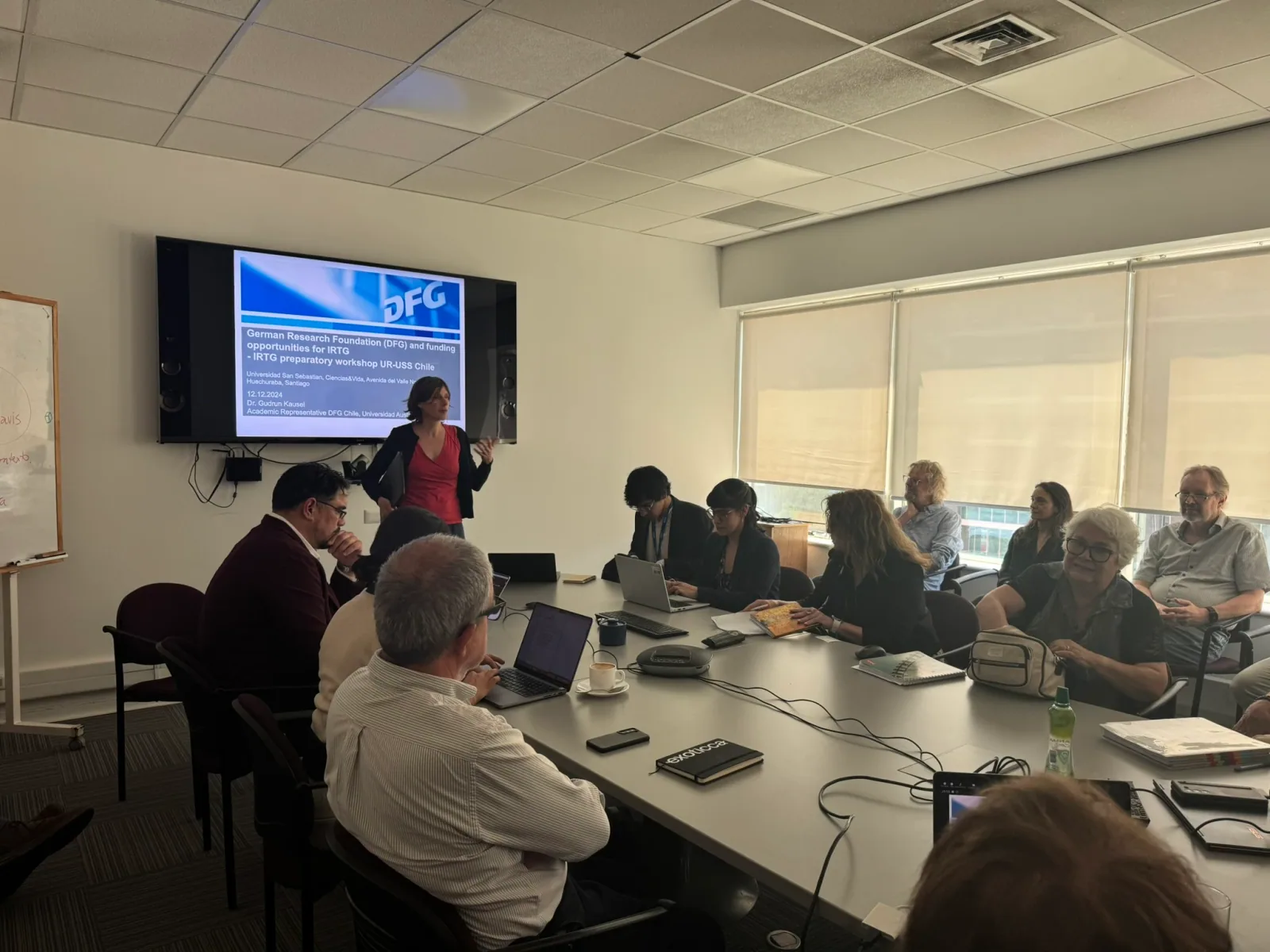
Between December 9 and 13, a binational research workshop was held between the University of Regensburg, Germany, and the Centro Basal Ciencia & Vida of Universidad San Sebastián, titled “Signaling to Chromatin – Joining Mechanisms and Models” (Señalización a la Cromatina: Uniendo Mecanismos y Modelos). This event marked a milestone in the collaboration between both institutions, laying the groundwork for joint scientific projects and exploring the creation of a double-degree Ph.D. program.
One of the main objectives of the workshop was preparation to apply for an International Research Training Group (IRTG), a program of the German Research Foundation (DFG, for its acronym in German) that combines scientific excellence with advanced training in an international context. This German program has an initial duration of four and a half years, with the possibility of extension to nine, and focuses on forming sustainable academic networks, promoting internationalization in doctoral education.
Currently, there are no IRTGs between Germany and South America, making this proposal a unique opportunity to strengthen academic cooperation between Chile and Germany. The researchers seeking to lead this initiative from the University of Regensburg are Drs. Gernot Längst and Laura Manelytee, alongside researchers and academics Drs. Alejandra Loyola and Nicole Tischler, who are also part of the Centro Científico Tecnológico de Excelencia Ciencia & Vida of USS, leveraging their previous experiences and joint activities to design a long-term vision.
Dr. Alejandra Loyola commented that "the creation of an international graduate program is essential to enhance our doctoral programs and to give our students the opportunity to join labs of excellence and learn cutting-edge techniques."
Collaboration Opportunities
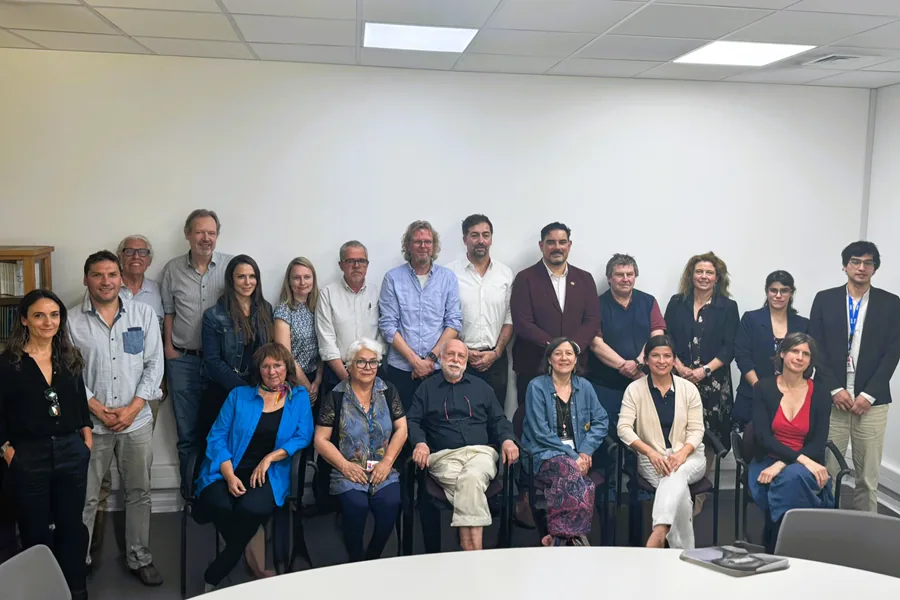
The University of Regensburg academics who participated in person at the workshop were Drs. Neva Caliskan, Claudia Gebhard, Gernot Längst, Laura Manelyte, and Michael Rehli, in addition to several researchers who joined remotely. Presenting their research lines from USS were Drs. Álvaro Lladser, Rodrigo Maldonado, Rodrigo Pacheco, and Rodrigo Villanueva, alongside Drs. Tischler and Loyola.
On Thursday, December 12, the academics dedicated a strategic day among authorities from Fundación Ciencia & Vida of USS, representatives from DFG, the National Agency for Research and Development (ANID), and USS, where public-private funding instruments in Chile were analyzed and the importance of internationalization in the training of researchers was highlighted.
They received strategic support from Dr. Pablo Valenzuela, director of Fundación Ciencia & Vida of USS, Dr. Tomás Pérez-Acle, vice-rector of Research and Doctorates of USS, as well as Carolina Gatica, director of Doctorates, Ana Luz Durán, director of International Affairs, and the directors of the doctoral programs, Drs. Mario Rosemblatt and Enrique Brandan. From Germany, Gudrun Krausel, DFG representative, contributed her expertise to structure and guide this collaboration.
Visits with German authorities in Chile were also an important component of the workshop. These included a meeting with authorities of the German Embassy, Minister Dr. Thomas Schmitt, and the office of Bayerisches Hochschulzentrum für Lateinamerika (BAYLAT) in Santiago, reinforcing the connection between both university institutions.
Additionally, the creation of a double-degree program for students of the Ph.D. programs in Immunology and Microbiology, Biotechnology and Bioentrepreneurship, and Computational Biology at USS was discussed. This proposal would allow students to obtain recognized degrees in both countries, expanding their academic and professional opportunities.
This workshop is just the beginning of a scientific collaboration with global impact, positioning Chile and Germany as strategic partners in knowledge generation and in building a more connected and international academic future. With the backing of programs such as those from ANID and DFG, the collaboration between USS and the University of Regensburg promises to consolidate itself as a benchmark in the training of world-class Ph.D. holders.