
Centro Ciencia & Vida, of Fundación Ciencia & Vida and Universidad San Sebastián, celebrates the award of three projects in the Fondecyt Regular 2025 call, reflecting its researchers’ commitment to advancing knowledge in immunology and neurosciences.
The Centro Ciencia & Vida, of the Fundación Ciencia & Vida and the Universidad San Sebastián, celebrates the awarding of three projects in the Fondecyt Regular 2025 competition, reflecting the commitment of its researchers to the advancement of knowledge in immunology and neurosciences.
The Universidad San Sebastián positions itself once again as a leading institution in research, with a total of 23 projects selected among its different faculties, strengthening its impact on the generation of frontier knowledge.
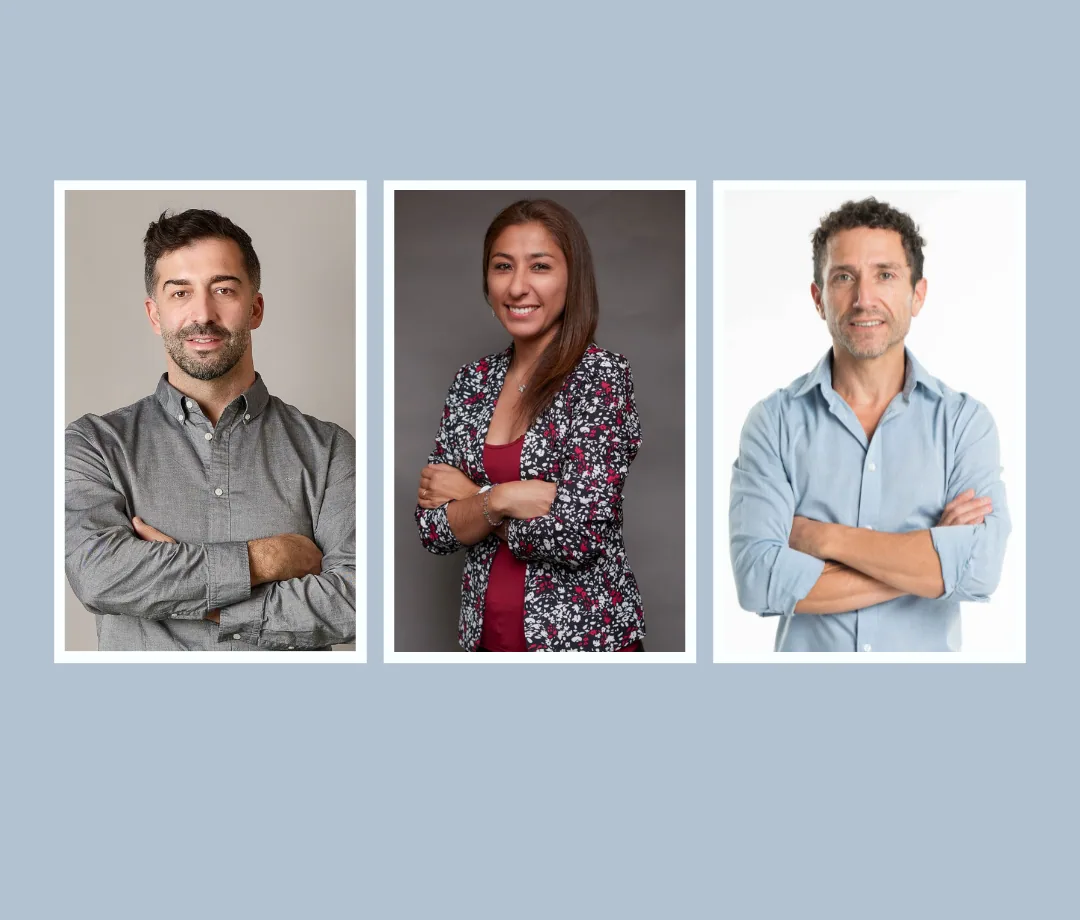
We congratulate Drs. Lladser, Prado, and Pacheco for this important recognition and reaffirm our commitment as a technological and scientific center of excellence to cutting-edge research, which contributes to the progress of knowledge and the training of new generations of scientists in the country.
Among the researchers from the Centro Ciencia & Vida selected in this call is Dr. Álvaro Lladser, who will develop a study on the role of regulatory T cells in immunity induced by cancer immunotherapy (Fondecyt 1251312). His project seeks to understand how these lymphocytes can contribute to the formation of immunological memory, with the goal of optimizing therapeutic strategies against cancer, improving the efficacy of treatments based on immunotherapy.
For her part, Dr. Carolina Prado, an associate researcher at the Basal Center, will study the role of the microbiota in the transit of intestinal immune cells toward the central nervous system in scenarios of homeostasis and disease (Fondecyt 1250646). Her work will focus on multiple sclerosis, an autoimmune disease without a cure, exploring how metabolites produced by the microbiota can influence the migration of immune cells and their impact on disease progression. This study hopes to open new possibilities for the development of alternative therapies that improve the quality of life of patients.
Dr. Rodrigo Pacheco, meanwhile, will analyze the role of the short-chain fatty acid receptor GPR43 in the interaction between T cells and the microbiota in Parkinson's disease (Fondecyt 1250021). His research will focus on how these bacterial metabolites can modulate pain perception in patients with Parkinson's, one of the most debilitating non-motor symptoms of this disease. If his hypothesis is confirmed, this study could contribute to the development of new therapeutic strategies to reduce chronic pain in these patients.
The awarding of these projects reinforces the contribution of the Centro Ciencia & Vida of the Universidad San Sebastián to science of excellence, with research that not only expands fundamental knowledge in biomedicine but also generates potential applications to improve the health and well-being of the population. These achievements underscore the impact of Chilean science in the understanding of complex diseases and the development of new therapies.
Collaboration with other institutions is fundamental for the development of research of this type. An example of this is the alliance with Dr. Margarita Calvo, from the Universidad Católica, an expert in pain, with whom Dr. Rodrigo Pacheco has worked on the publication of studies on the microbiota and pain perception in Parkinson's disease. Thanks to this collaboration, it has been possible to delve into the study of chronic pain and strengthen the Fondecyt project application.
The link with researchers from other institutions reinforces the impact and reach of the scientific studies carried out at the basal center and promoted by the Agencia Nacional de Investigación y Desarrollo, ANID.