

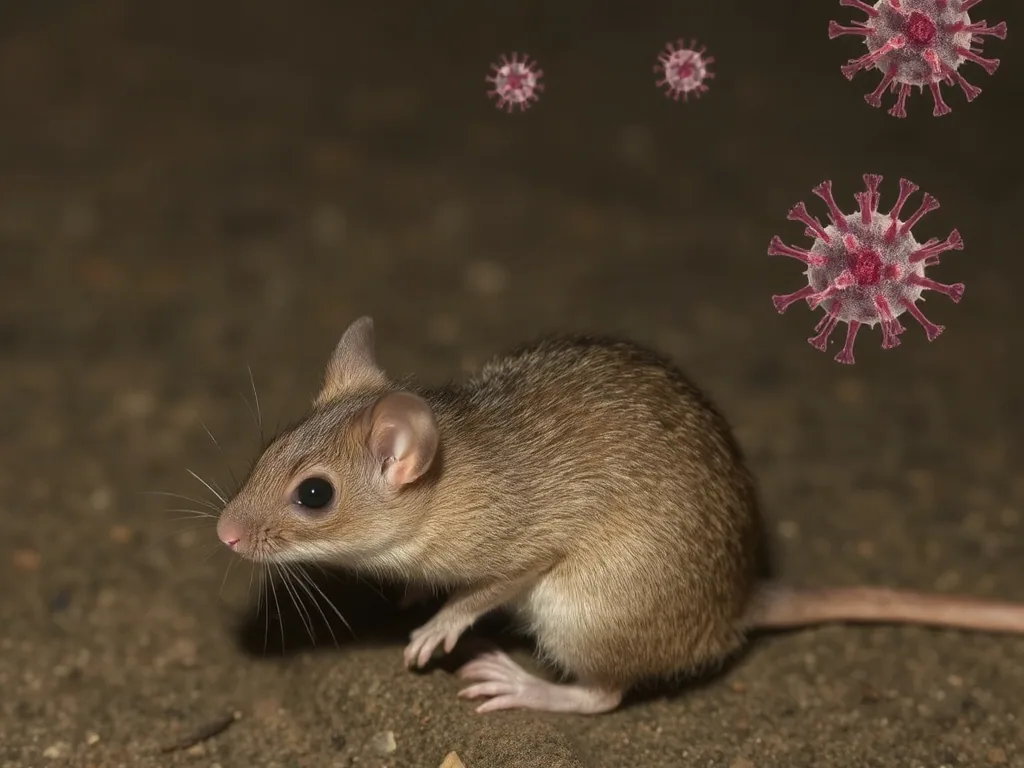
Dr. Nicole Tischler and Dr. Alejandro Rojas, prominent researchers from Fundación Ciencia & Vida - USS and the Universidad Austral de Chile, respectively, lead a pioneering project against the Andes virus, one of the most lethal species of hantavirus, endemic to Chile and Argentina.
The project, which began in 2017, celebrates the publication of a patent application.
Dr. Nicole Tischler and Dr. Alejandro Rojas, prominent researchers from Fundación Ciencia & Vida - USS and the Universidad Austral de Chile, respectively, lead a pioneering project against the Andes virus, one of the most lethal species of hantavirus, endemic to Chile and Argentina.
"Both technologies, the development of nanobodies and the development of antigens, were fundamental to giving rise to these new nanoantibodies or nanobodies," explained Dr. Tischler.
Dr. Tischler is a principal investigator at the Centro Basal Ciencia & Vida, Universidad San Sebastián, and a virologist specializing in the development of vaccine antigens, from where she has created an innovative platform based on empty, non-infectious hantavirus viral particles to generate an immune response.
For his part, Dr. Rojas is a researcher at the Universidad Austral with a track record in the production of nanoantibodies from the immune system of alpacas, leveraging the unique properties of these antibodies, which can be produced on a large scale as biopharmaceuticals.
In this regard, Dr. Rojas explains that “alpaca antibodies are characterized by being very simple, and, unlike human antibodies, they are generated from a single gene. This fantastic property makes them easy to isolate and produce on a large scale; in fact, their production can be carried out similarly to the process used to produce other proteins for medical use, such as insulin.”
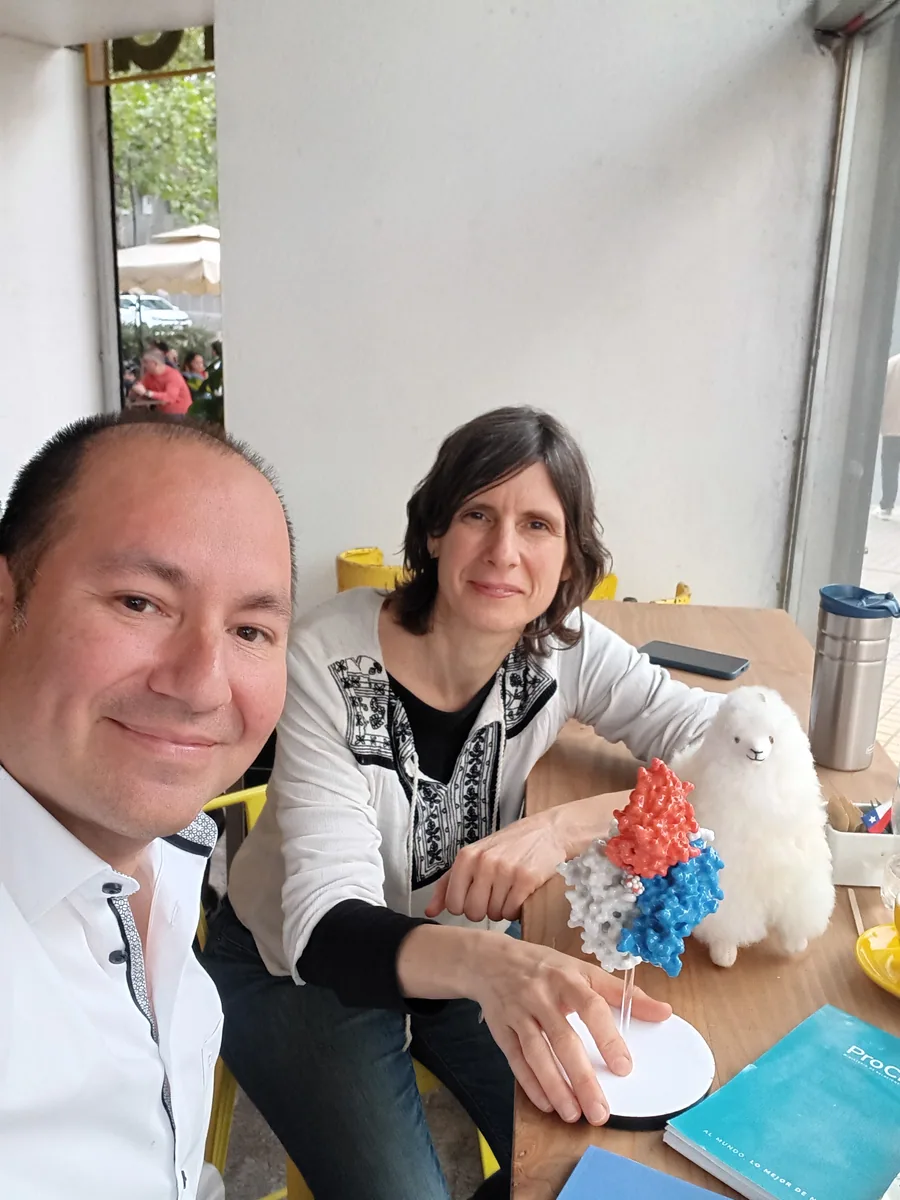
The collaboration arose thanks to Dr. Carola Otth, a renowned researcher from the Universidad Austral, who is unfortunately no longer with us. Her initiative allowed both researchers to combine their technologies to develop specific nanoantibodies for the Andes virus.
Nanoantibodies are smaller and are therefore considered a simplified version of conventional antibodies. Extracted from the immune system of alpacas, they are also highly specific and have the ability to neutralize the virus by blocking its infectivity in vitro. This approach is especially promising for combating hantavirus, whose infections in humans can cause cardiopulmonary syndrome, with high fatality rates, and which currently lacks an effective clinical treatment.
A joint effort
Since the beginning of the project, the researchers, along with their students at the time—now doctors Ronald Jara from UACH and Nicolás Muena from Fundación Ciencia & Vida—have managed to isolate and characterize more than 120 nanoantibodies. Following rigorous testing under biocontainment conditions, three families of nanoantibodies with neutralizing capacity at very low concentrations—meaning high efficacy—were identified. These advances have been made possible thanks to the infrastructure of the BSL3 laboratory at the Pontificia Universidad Católica de Chile and international collaborations, such as with the University of Queensland in Australia.
"We focused on generating a range of highly specific antibodies for the Andes virus, because we know that a monotherapy might not be sufficient due to the ability of viruses to adapt and escape," points out Dr. Tischler.

These joint contributions made it possible to study the biochemical characteristics of the nanoantibodies; that is, how strongly they bind to the viral surface, and furthermore, where they bind and the mechanism of blocking infectivity.
However, the development of this therapy has not been without difficulties. A lack of funding has slowed down the process at several stages. Despite this, the team has made 90% progress in developing an emergency injectable therapy that combines two mechanisms: direct neutralization of the virus and activation of the patient's immune system.
Dr. Rojas points out that “we of course hope that our authorities in Chile react to this possibility by establishing the production capacities for vaccines and biopharmaceuticals committed during the pandemic, as well as instructing regulatory entities to facilitate the delivery of clinical-grade nanoantibodies to infected patients and their contacts in order to treat and prevent the viral condition.”
Dr. Tischler remarks that: “Today, one of the main concerns is person-to-person transmission of the virus, a characteristic that has so far been described exclusively for the Andes virus. Although this transmission had only been documented in cases of close contact, in 2018 an outbreak occurred in Epuyén, Argentina, in which one patient infected 34 people, causing 11 deaths and leading to the quarantine of the town to halt the chain of transmission. In this context, it is essential to develop antiviral strategies that allow us to be prepared for the possibility of an outbreak in a less rural area in the future.”
Future perspectives
Currently, the researchers are working on evaluating combinations of humanized nanoantibodies to improve treatment efficacy and reduce the possibility of viral escape. This approach not only seeks to save lives in areas affected by the Andes virus but also to prepare Chile for future outbreaks.
Dr. Rojas concludes by emphasizing that: “We intend to develop an emergency injectable therapy that neutralizes the virus through two simultaneous mechanisms and also connects the antibody to the patient's immune system, supporting and reinforcing their own immune response. It has been 7 years of work with ups and downs; today we celebrate the publication of the first patent application, which carries a positive report and demonstrates the novelty and great potential of our alpacas' nanoantibodies to solve a problem as local as hantavirus cardiopulmonary syndrome.”
Dr. Tischler, for her part, leads a parallel project to develop a vaccine based on stabilized particles of the Andes virus, a project that shows clear state interest in addressing this public health issue.
Both researchers highlight the importance of sustained support from Chilean authorities. Investment in vaccine and biopharmaceutical production capacities, as well as in regulations that facilitate clinical development, are crucial to transforming this scientific breakthrough into a concrete solution for patients.
With more than seven years of joint work, this interdisciplinary effort represents a tangible hope for tackling hantavirus cardiopulmonary syndrome and other virology challenges in Chile and the world.
Text by: Communications Centro Basal Ciencia & Vida and Universidad Austral.