
The exam, which validates specific technical competencies, is highly valued internationally and strengthens the capabilities of both our country and the region in these areas.
The exam, which validates specific technical competencies, is highly valued internationally and strengthens the capabilities of both our country and the region in these areas.
Dr. Nicole Tischler, virologist, academic, and principal investigator of the Centro Basal Ciencia & Vida, of the Fundacion Ciencia & Vida - Universidad San Sebastian, has been recently recognized by obtaining the professional certification in Biorisk Management awarded by the International Federation of Biosafety Associations (IFBA).
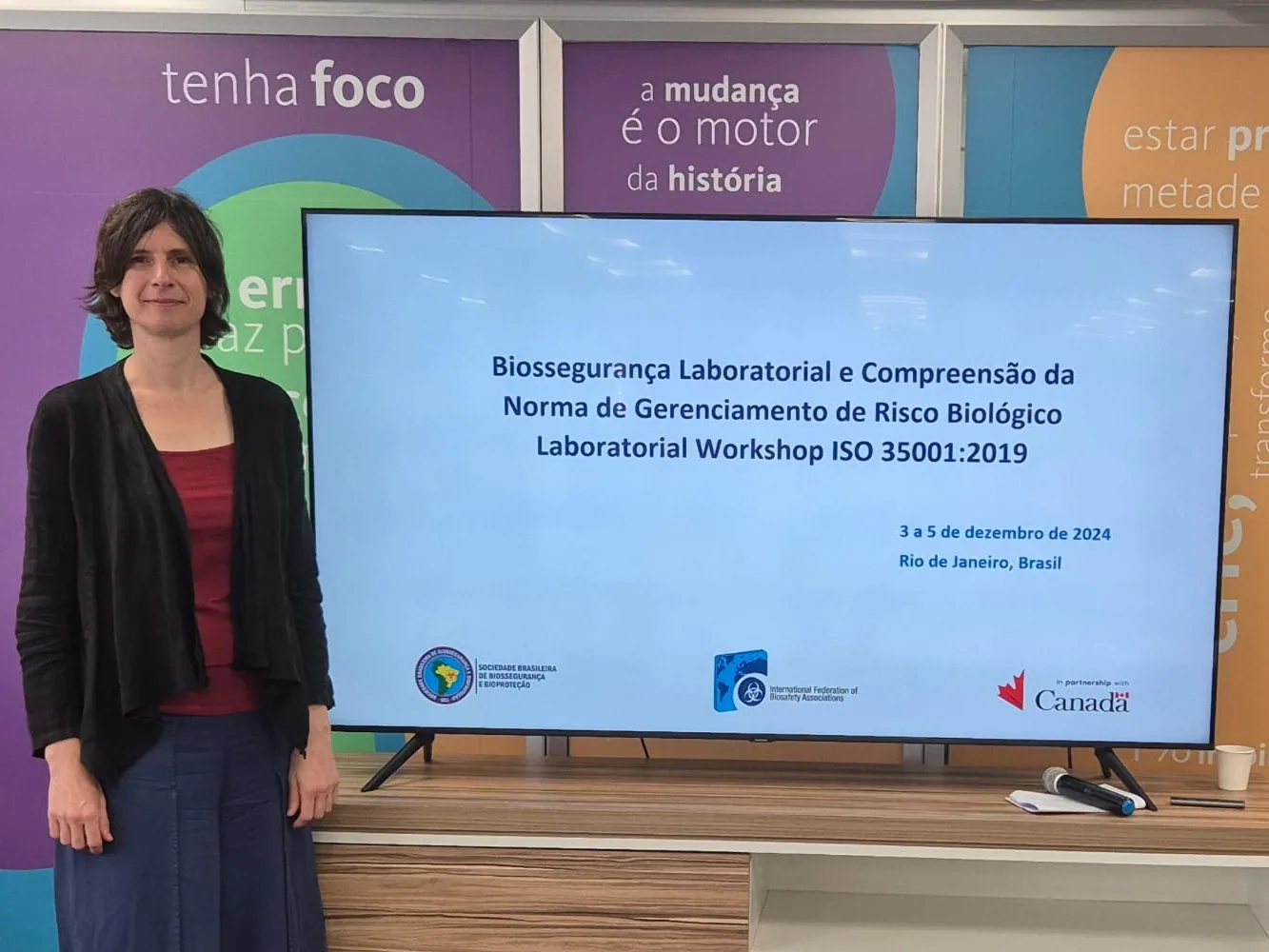
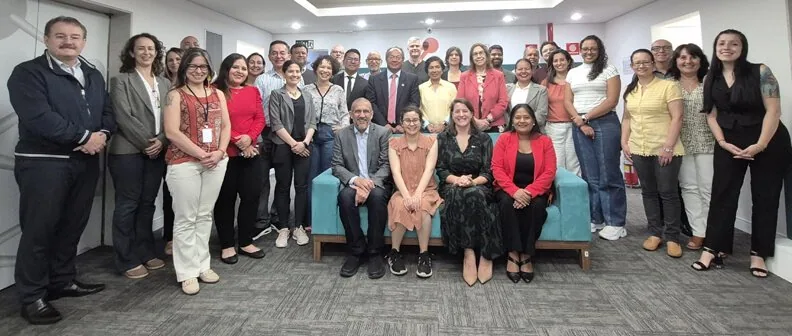
The certification was obtained following her participation in the “Workshop on Laboratory Biosafety and Understanding the ISO 35001:2019 Biorisk Management Standard” , held from December 3 to 5, 2024, in Rio de Janeiro, Brazil. Organized by the Brazilian Biosafety and Bioprotection Association (SB3) in collaboration with the IFBA, the workshop brought together 30 professionals from eight countries in our region with the aim of promoting international standards and strengthening regional biosafety networks.
“For the study of pathogenic viruses in the context of vaccine and antiviral development, it is essential that we researchers also train in biosafety and biosecurity to handle them responsibly. The IFBA certification allows the measurement of professional knowledge and skills expected for the discipline and commits the researcher to its full compliance,” explained Dr. Tischler.
This certification achievement reflects the deep commitment of the research driven by the Centro Basal Ciencia & Vida, part of the USS Science, Innovation and Entrepreneurship Park, to biosafety and biosecurity, key disciplines in the prevention and management of biological risks in laboratories and other critical environments. Dr. Tischler stood out for her contribution to the exchange of knowledge and best practices, consolidating herself as a benchmark in her field.
The recognition not only positions the researcher from Centro Ciencia & Vida, of the Fundacion Ciencia & Vida - Universidad San Sebastian, as a leader in the field of virology and biosafety, but also reinforces the relevance of Chilean scientific research in the global context. Her participation and certification are an example of the key role that academics and researchers play in developing sustainable capacities to face biological challenges in the region and the world.